

Conversations 1
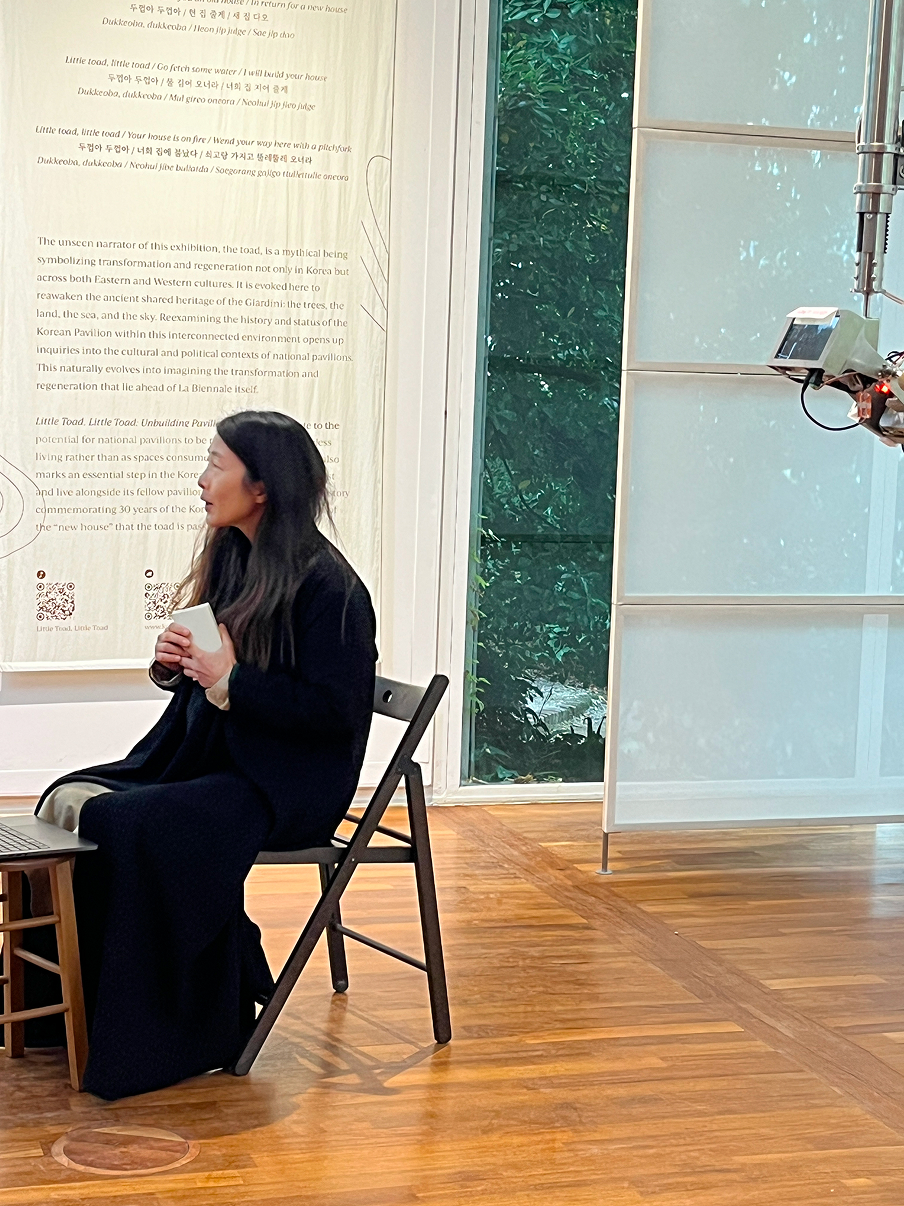
Korean Pavilion Closing Program_Preposition Architecture
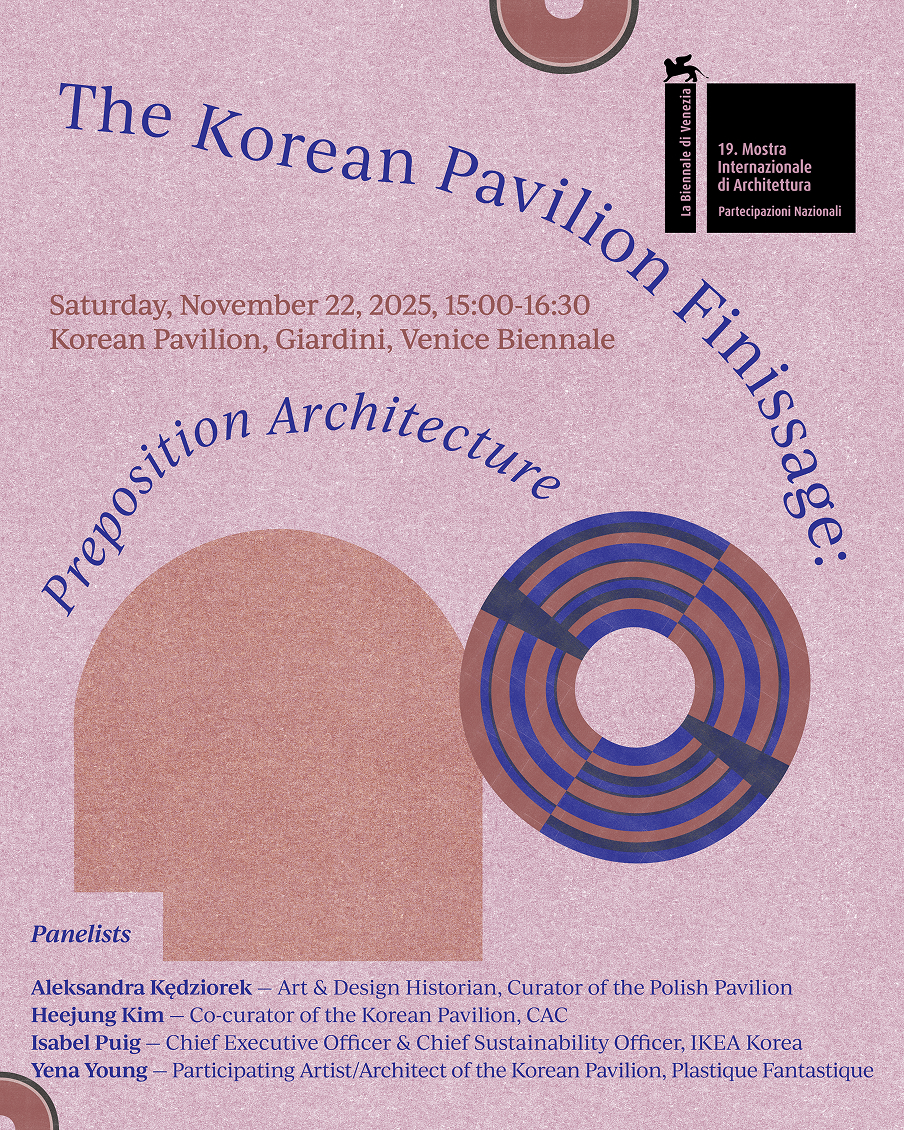
Preposition Architecture was the closing
public program of the Korean Pavilion, exploring the
multiple boundaries and relationships through which
architecture intervenes, with territory as
its central lens. The program approached
architecture not as a singular physical object, but
as a layered process in which furniture and craft,
material reuse, coexistence with the environment,
sensory experience, and social contexts intersect.
It aimed to articulate sustainability not as a
purely technical solution, but as a matter of
choices, attitudes, and relational practices.
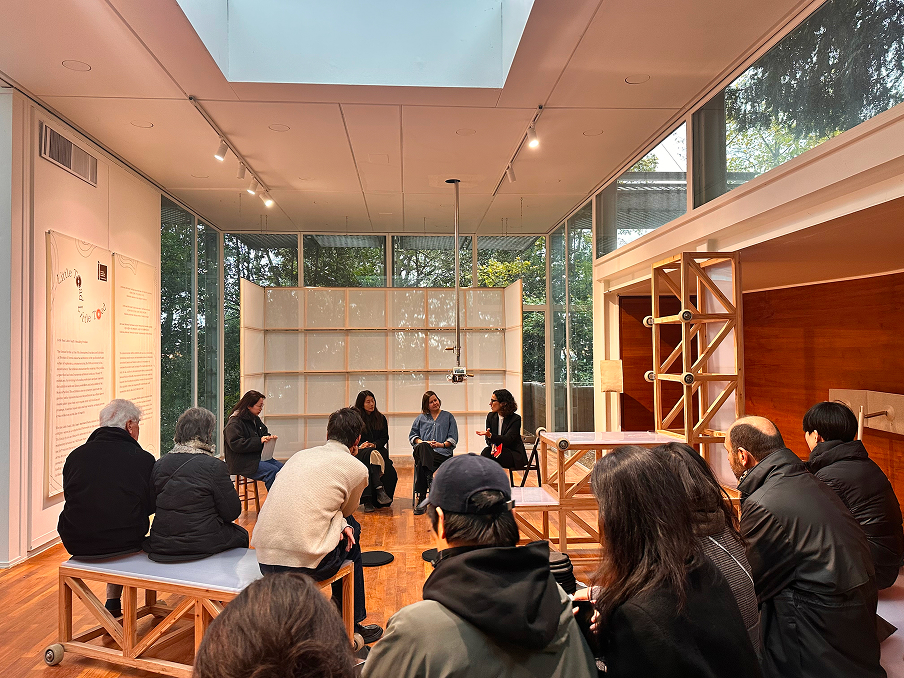
Rather than understanding architecture as a fixed entity, the program focused on architecture as a process that operates through various relationships and practices. Panelists from diverse fields reflected on what architecture relates to, how it is experienced, and how far its domain can extend. These discussions revealed how architecture intertwines with everyday experiences, social systems, the environment, and sensory perception—revisiting the key themes of home, time, memory, sensation, and relationships that the Korean Pavilion exhibition has continuously raised.
Rather than understanding architecture as a fixed entity, the program focused on architecture as a process that operates through various relationships and practices. Panelists from diverse fields reflected on what architecture relates to, how it is experienced, and how far its domain can extend. These discussions revealed how architecture intertwines with everyday experiences, social systems, the environment, and sensory perception—revisiting the key themes of home, time, memory, sensation, and relationships that the Korean Pavilion exhibition has continuously raised.
Speakers & Themes
Isabel Puig (CEO & CSO, IKEA
Korea) — WITH Architecture
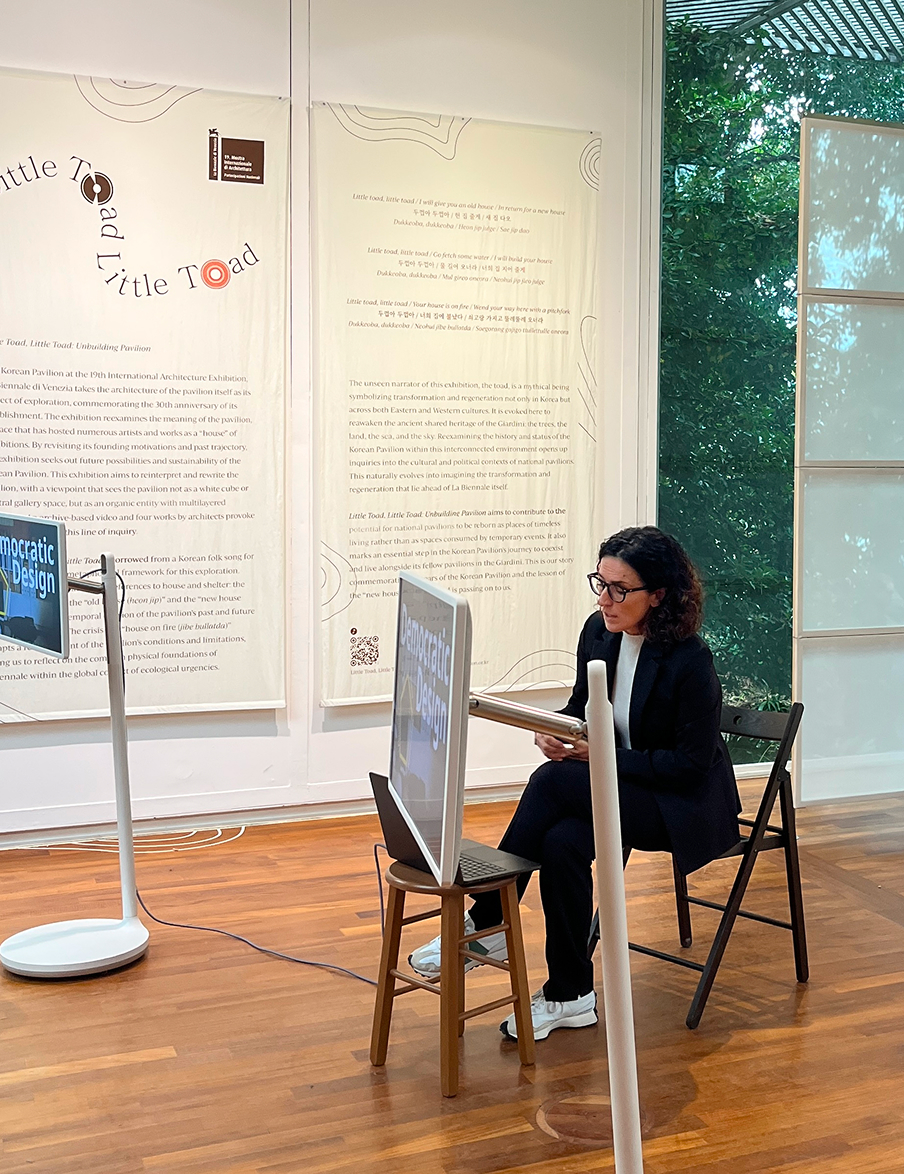
Puig introduced IKEA’s circular economy system and philosophy of sustainable design, emphasizing that furniture and household objects are not merely consumer goods but the most everyday architectural units shaping space. She described how the flow of resources—from production and distribution to use and recycling—forms an extended territory, demonstrating sustainability as a relational practice shared by corporations, consumers, and everyday life.
Puig introduced IKEA’s circular economy system and philosophy of sustainable design, emphasizing that furniture and household objects are not merely consumer goods but the most everyday architectural units shaping space. She described how the flow of resources—from production and distribution to use and recycling—forms an extended territory, demonstrating sustainability as a relational practice shared by corporations, consumers, and everyday life.
Aleksandra Kedziorek (Art and
Design Historian, Curator of the Polish Pavilion) — Architecture FROM WITHIN
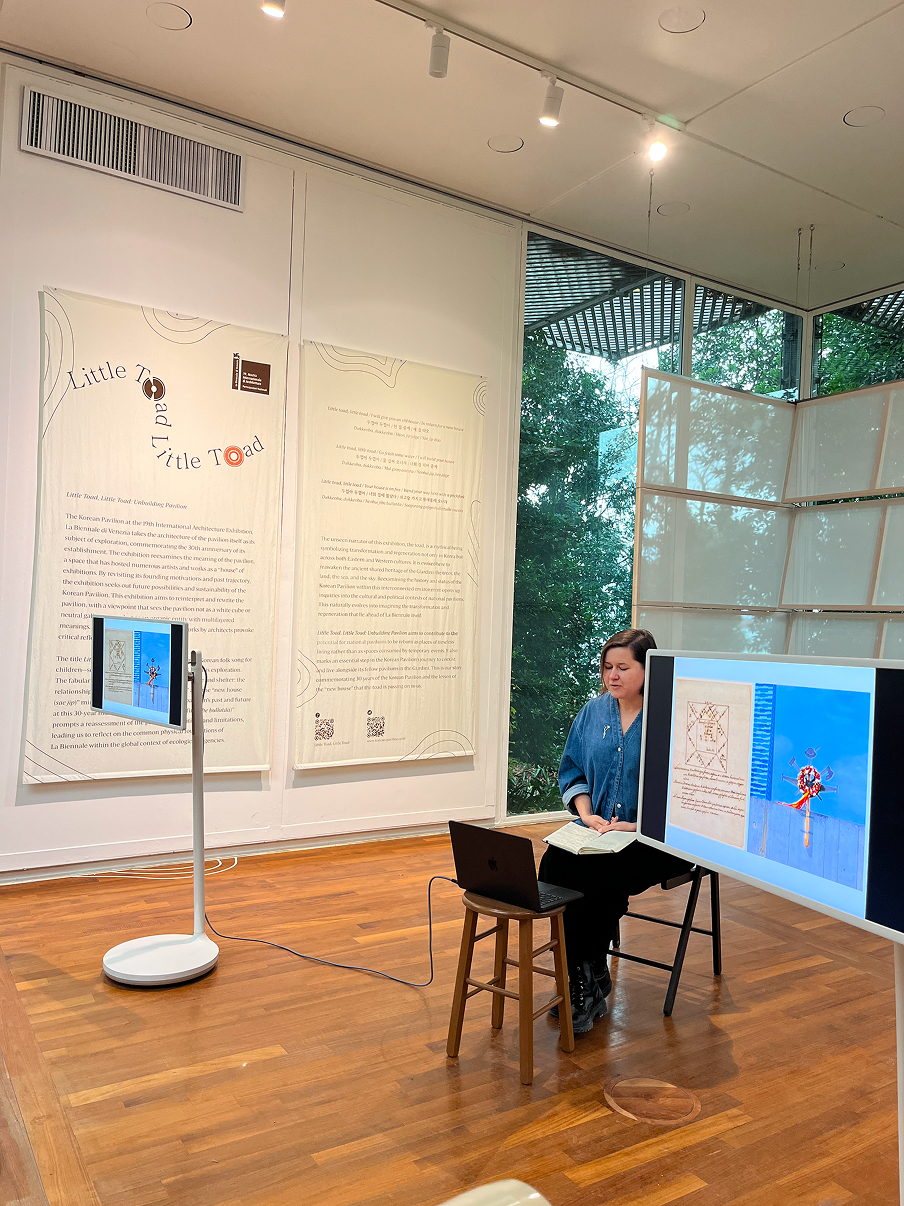
Kedziorek proposed a view of architecture through memory, emotion, rituals, and daily life. She described architecture as a “living territory” infused with stories and emotions accumulated over time, highlighting how crafts, everyday objects, and sensory experiences—often marginalized in architectural histories—have been central to shaping space. Her talk expanded sustainability toward cultural and emotional continuity.
Kedziorek proposed a view of architecture through memory, emotion, rituals, and daily life. She described architecture as a “living territory” infused with stories and emotions accumulated over time, highlighting how crafts, everyday objects, and sensory experiences—often marginalized in architectural histories—have been central to shaping space. Her talk expanded sustainability toward cultural and emotional continuity.
Young Yena (Plastique Fantastique,
Participating Artist of the Korean Pavilion) — THROUGH Architecture
Focusing on immaterial elements such as air, light, sound, and temperature, Young Yena explored how sensory spaces are formed. Through her work, she suggested that architecture is not defined solely by walls and structures, but can also be temporary and fluid, shaped through bodily movement and sensory flows. Her presentation opened up new possibilities for shared spaces between humans, environments, and non-human beings.
Focusing on immaterial elements such as air, light, sound, and temperature, Young Yena explored how sensory spaces are formed. Through her work, she suggested that architecture is not defined solely by walls and structures, but can also be temporary and fluid, shaped through bodily movement and sensory flows. Her presentation opened up new possibilities for shared spaces between humans, environments, and non-human beings.
Kim Heejung (Co-Artistic Director
of the Korean Pavilion, Venice Biennale 2025) — Architecture AMONG Others
Kim examined the historical, political, and ecological layers of the Giardini, describing the Korean Pavilion as a territory where multiple temporalities and forms of existence coexist beyond a singular national narrative. Revisiting Little Toad, Little Toad: The Time of the House, she reframed sustainability as the continuity of relationships rather than physical preservation.
Kim examined the historical, political, and ecological layers of the Giardini, describing the Korean Pavilion as a territory where multiple temporalities and forms of existence coexist beyond a singular national narrative. Revisiting Little Toad, Little Toad: The Time of the House, she reframed sustainability as the continuity of relationships rather than physical preservation.
The panel discussion addressed how national
pavilions in the Giardini might imagine new forms of
“territory” today, how the nation-centered structure
of the Giardini can be reinterpreted, and how
national narratives might coexist with personal,
sensory, and relational practices. Rather than
concluding the exhibition, this program opened it as
a new point of departure, reminding us that
sustainability is ultimately a question of how we
relate to the world.
Conversations 2
Homecoming Exhibition Public Program_Living Archives
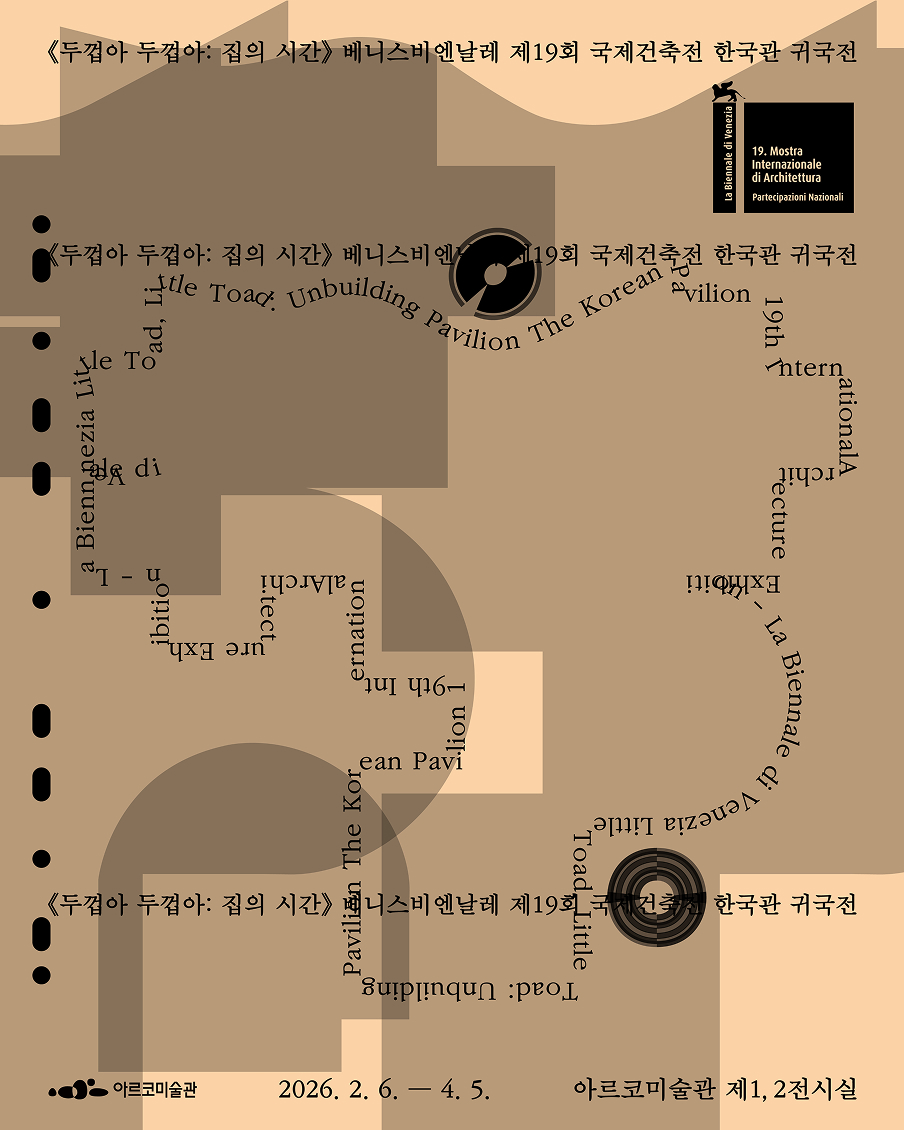
Living Archives is both a reading room of
past exhibitions in the Korean Pavilion and a public
forum addressing questions they raise today.
Functioning as a hinge between Unfolding Archives and Layering Archives, it becomes a stage
for discussion and dialogue.
Across eight forums held during the exhibition period, the program revisits the making of Little Toad, Little Toad: Unbuilding Pavilion and reflects on the meaning of the homecoming exhibition, addressing architectural questions tied to the pavilion. The forums also examine the sustainability of the Biennale, as well as tensions between exhibition-making and architecture, offering voices from the field that exceed what the exhibition itself can show.
Across eight forums held during the exhibition period, the program revisits the making of Little Toad, Little Toad: Unbuilding Pavilion and reflects on the meaning of the homecoming exhibition, addressing architectural questions tied to the pavilion. The forums also examine the sustainability of the Biennale, as well as tensions between exhibition-making and architecture, offering voices from the field that exceed what the exhibition itself can show.
- February 12 (Thu)
- Curator Talk #1 — Chung Dahyoung
- February 26 (Thu)
- Curator Talk #2 — Kim Heejung
- February 28 (Sat)
- Artist Talk — Kim Hyunjong, Heechan Park, Young Yena, Lee
Dammy
Moderated by Kim Heejung, Jung Sungkyu
- March 5 (Thu)
- Curator Talk #3 — Jung Sungkyu
- March 12 (Thu)
- Curator Talk #4 — Kwak Seung-Chan
- March 19 (Thu)
- Korean Pavilion Architecture Lecture — Chun Jinyoung
Moderated by Kim Heejung
- March 21 (Sat)
- Special Forum 1 — Sustainability of the Venice Architecture Biennale Lee Jihoi, Yim Dongwoo, Lim Jinyoung, Chung Dahyoung
- March 28 (Sat)
- Special Forum 2 — (Korean Pavilion) Architecture and Exhibition Making Choi Binna, Chung Dahyoung, Moon Kyungwon
Schedules subject to change. Please check the ARKO
Art Center website and social media.