We Do Not Part by Han Kang is a contemplative novel that follows a writer drawn into a remote, snowbound landscape where personal memory, historical violence, and fragile human bonds converge, all against the backdrop of the Jeju 4.3 Uprising and Massacre. Moving between past and present, the narrative traces how trauma—particularly state-inflicted violence—persists within bodies, relationships, and the land itself, while also attending to acts of care, mourning, and quiet endurance.
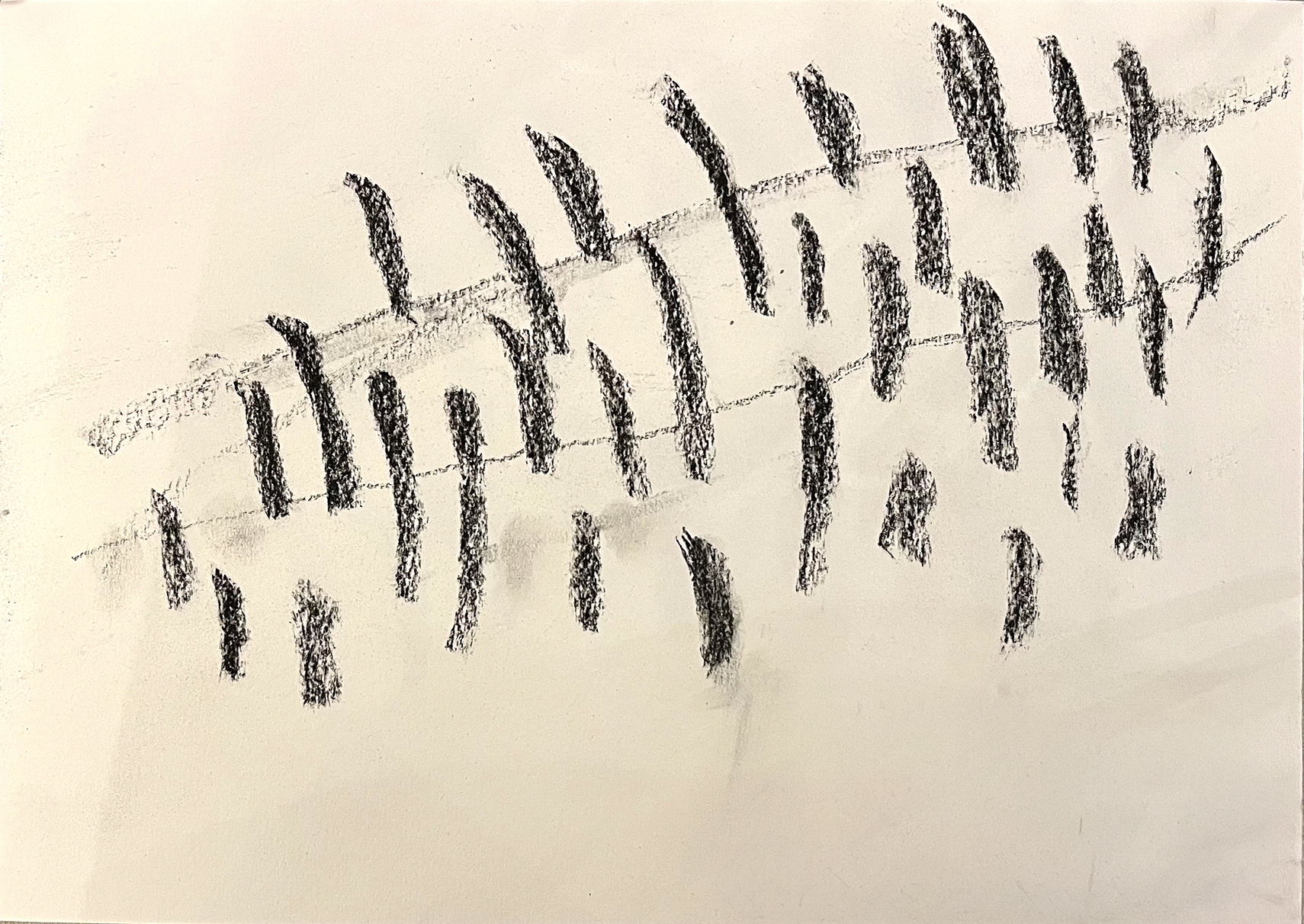
A sparse snow was falling.
I stood on flat land that edged up a low hill. Along the brow of this hill and down its visible face to the seam of the plain, thousands of black tree trunks jutted from the earth. They varied in height, like a crowd of people ranging in age, and were about as thick as railway sleepers, though nowhere near as straight. Stooped and listing, they gave the impression of a thousand men, women, and haggard children huddling in the snow.
Was this a graveyard? I wondered. Are these gravestones?
I walked past the torsos—treetops lopped off, exposed cross sections stipled with snowflakes that resembled salt crystals; I passed the prostrating barrows behind them. My feet stilled as I noticed the sensation of water underfoot. That’s strange, I thought. Within moments the water was up to my ankles. I looked back. What I saw astonished me: the far horizon turned out to be the shoreline. And the sea was crashing in.
The words tumbled from my lips: Who would bury people in such a place?
The current was strong. Had the tide surged in and out like this each day? Were the lower mounds hollowed out, the bones long since swept away?
There was no time. The graves already underwater were out of reach, but the remains higher up the slope, I needed to move them to safety. Now, before the sea encroached further. But how? There was no one around. I had no shovel. How would I get to them all? At a loss, I ran through the thicket o black trees, knees cleaving the rising water.
When I opened my eyes, the day had yet to break. The snowy field, the black torsos, the flood tide were gone; the only thing that met my stare was the window of my darkened room. I shut my eyes. Another dream about G–, it had to be. At this thought, I covered my lids with the cold palm of my hand and lay there unmoving.