The National Assembly, the Night of Martial Law
24.12.03 - 24.12.04
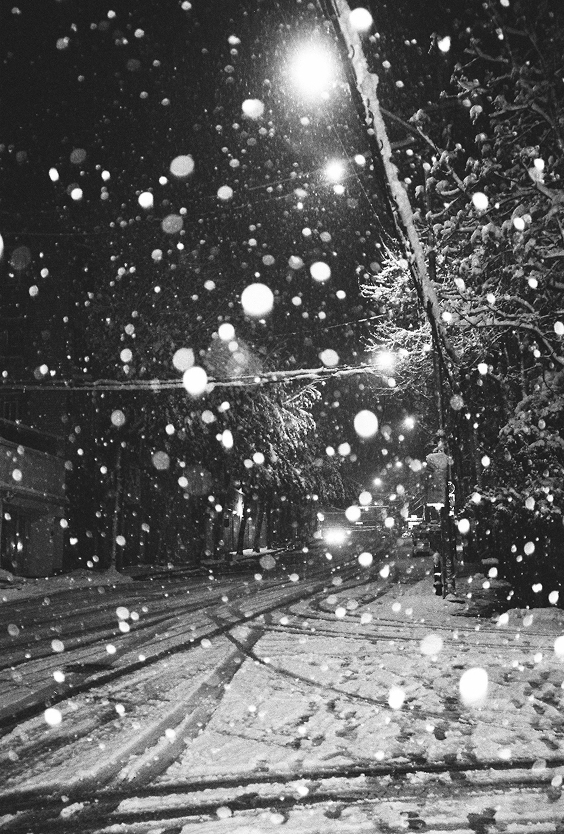
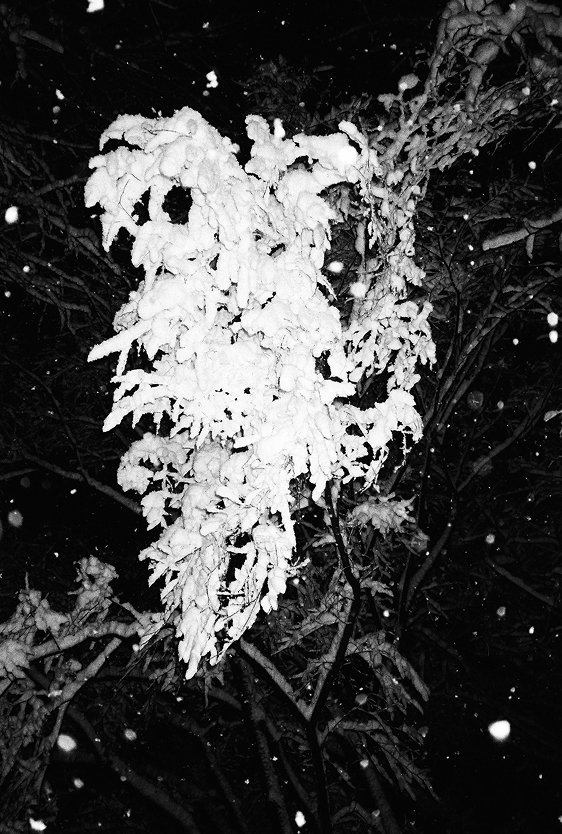
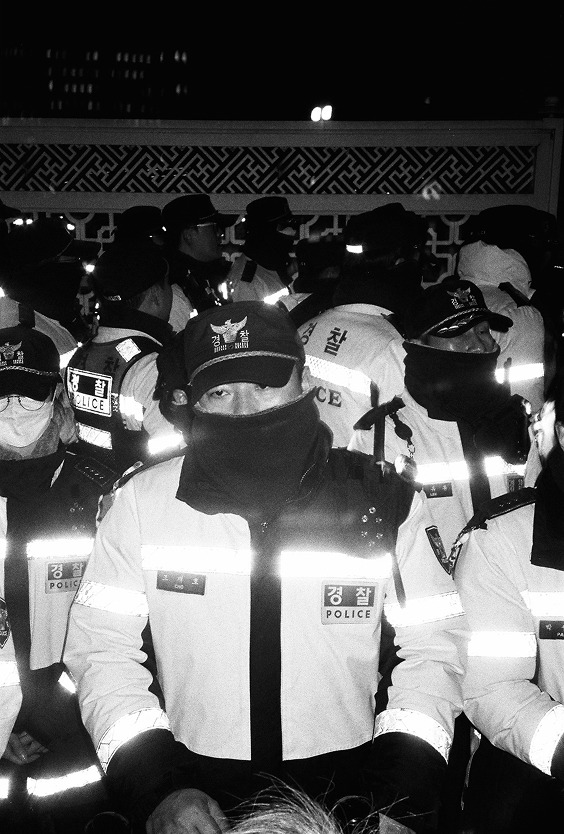
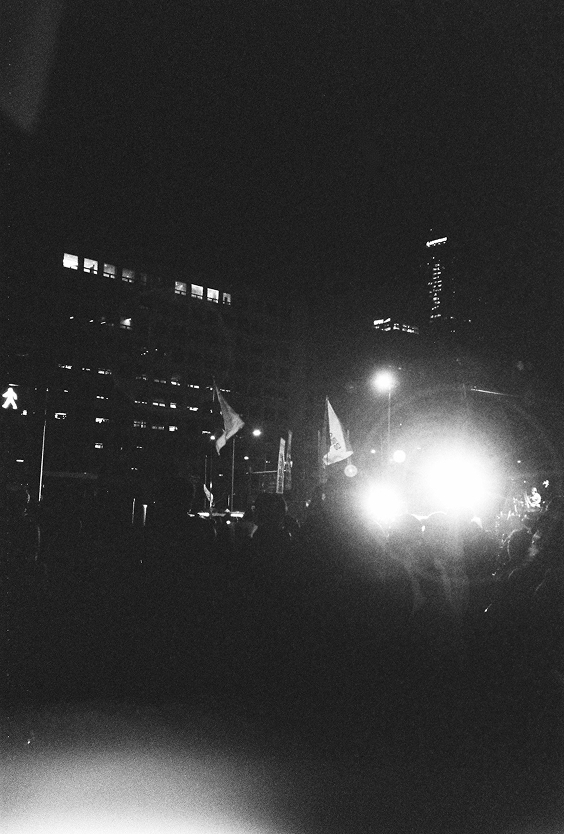
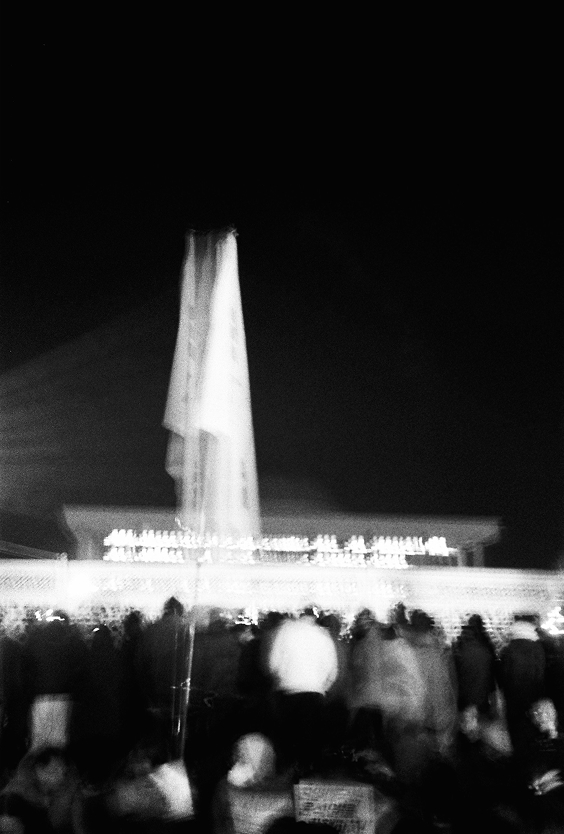
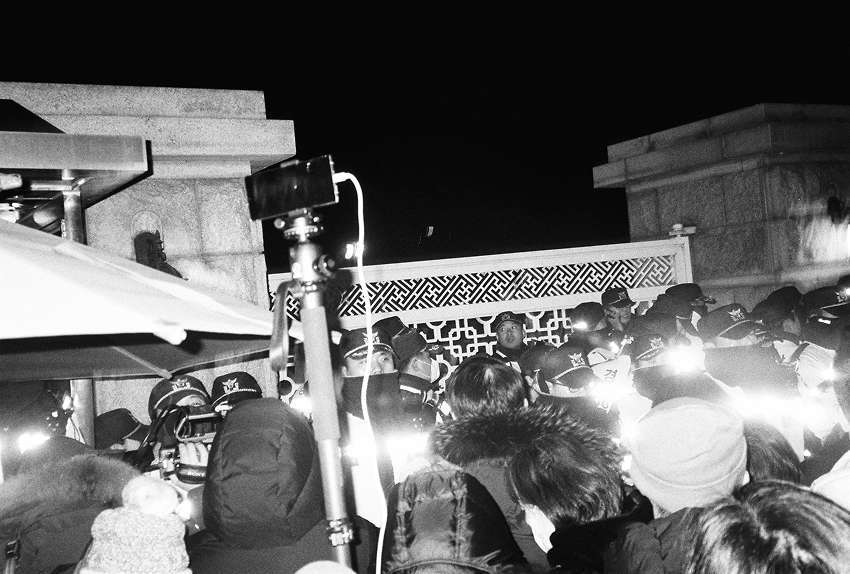
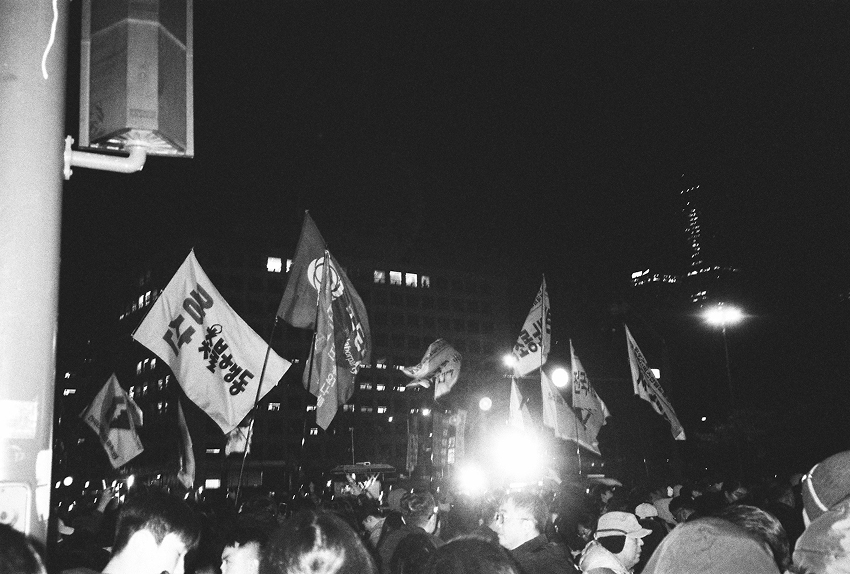
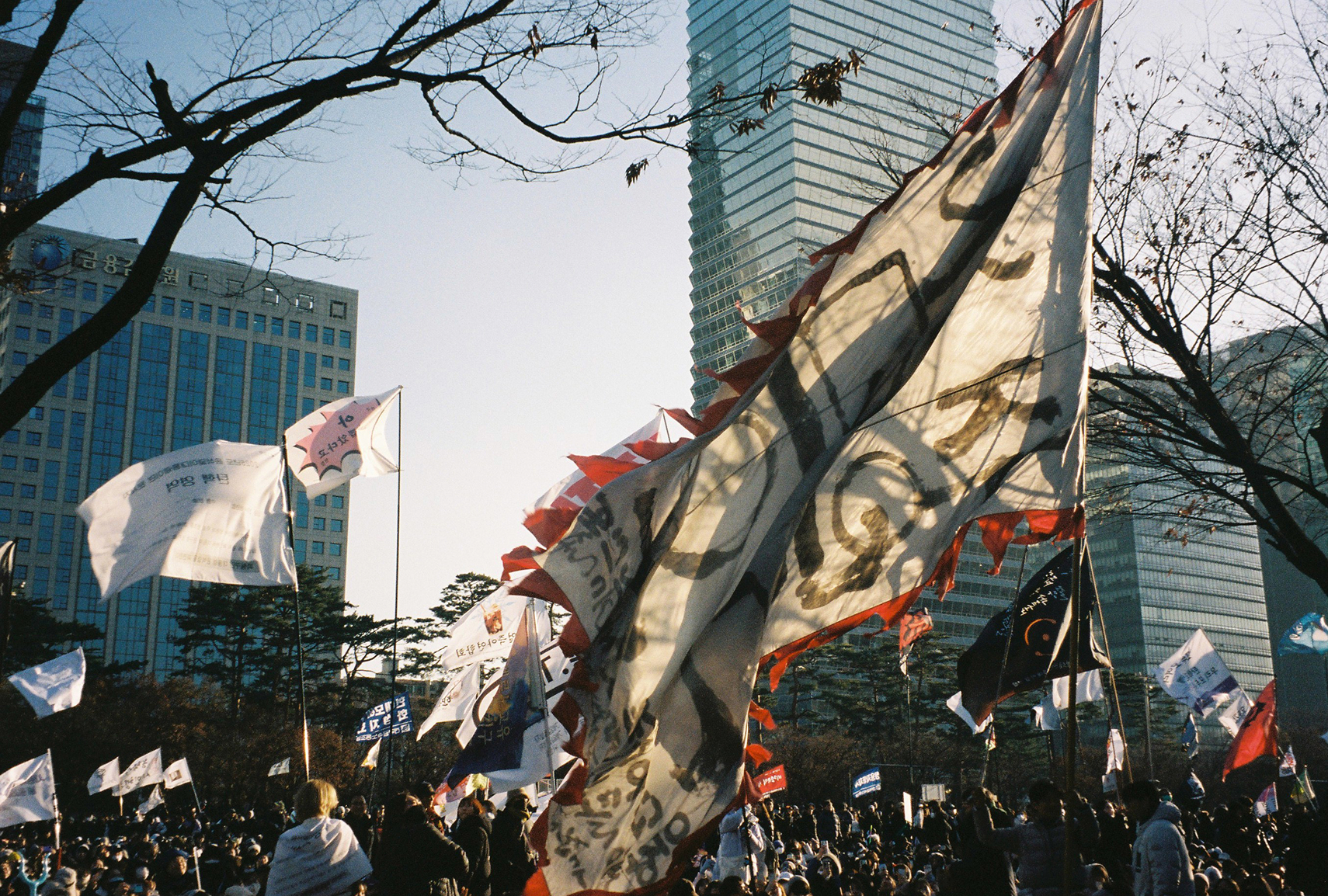
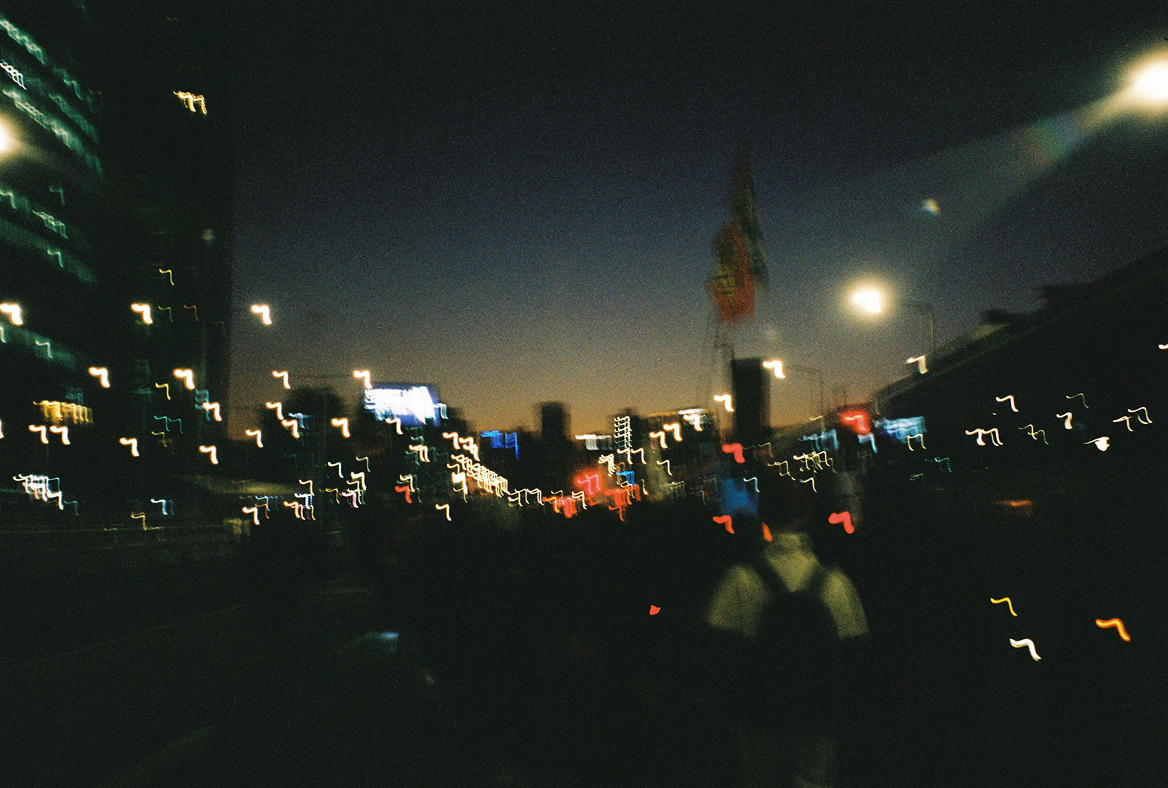
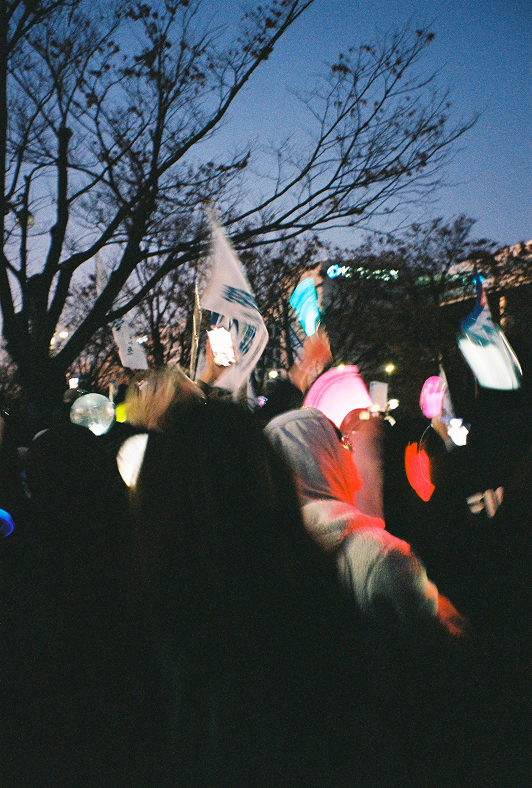
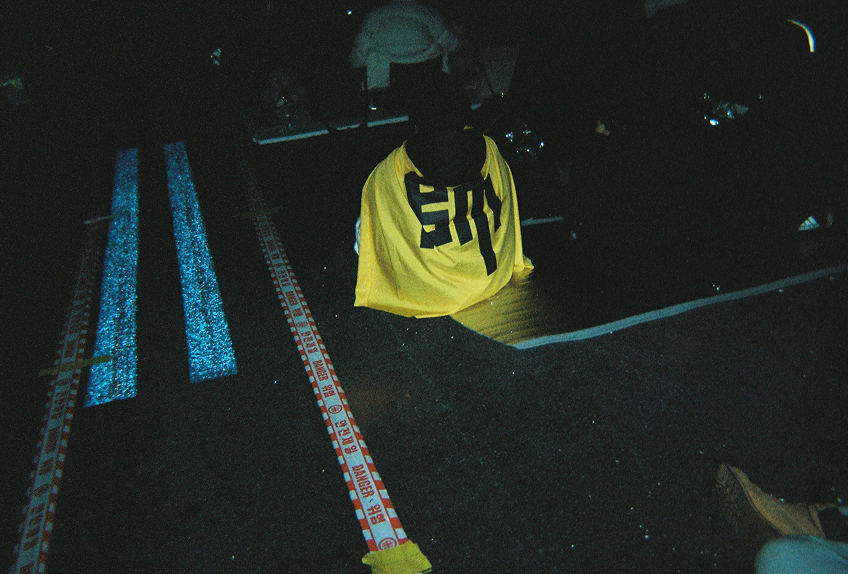
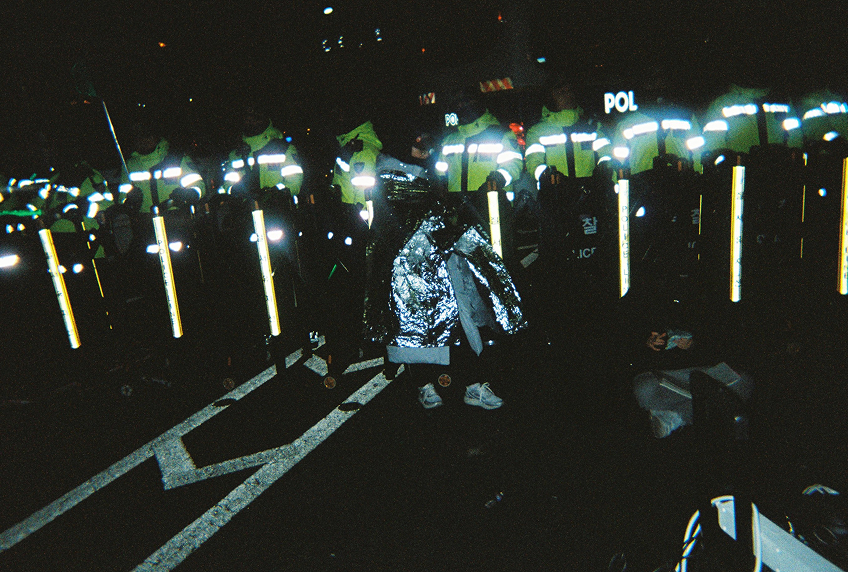
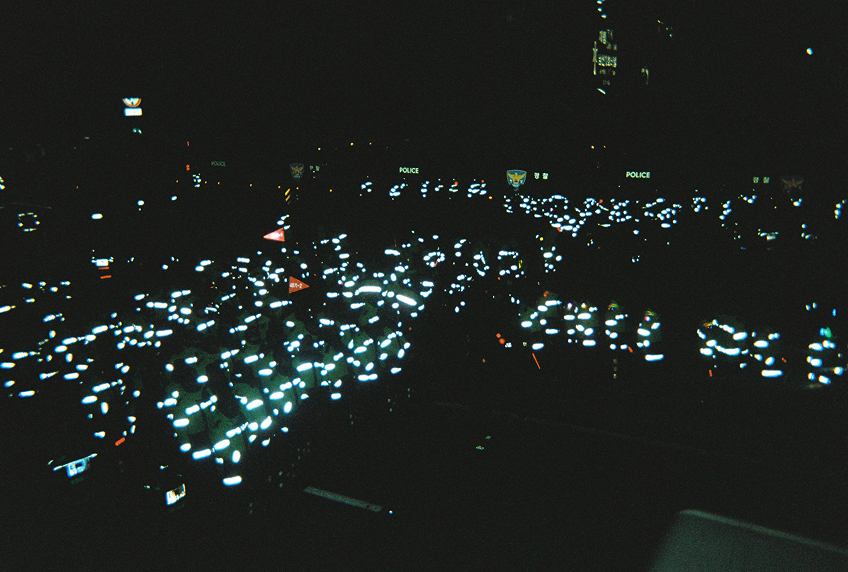
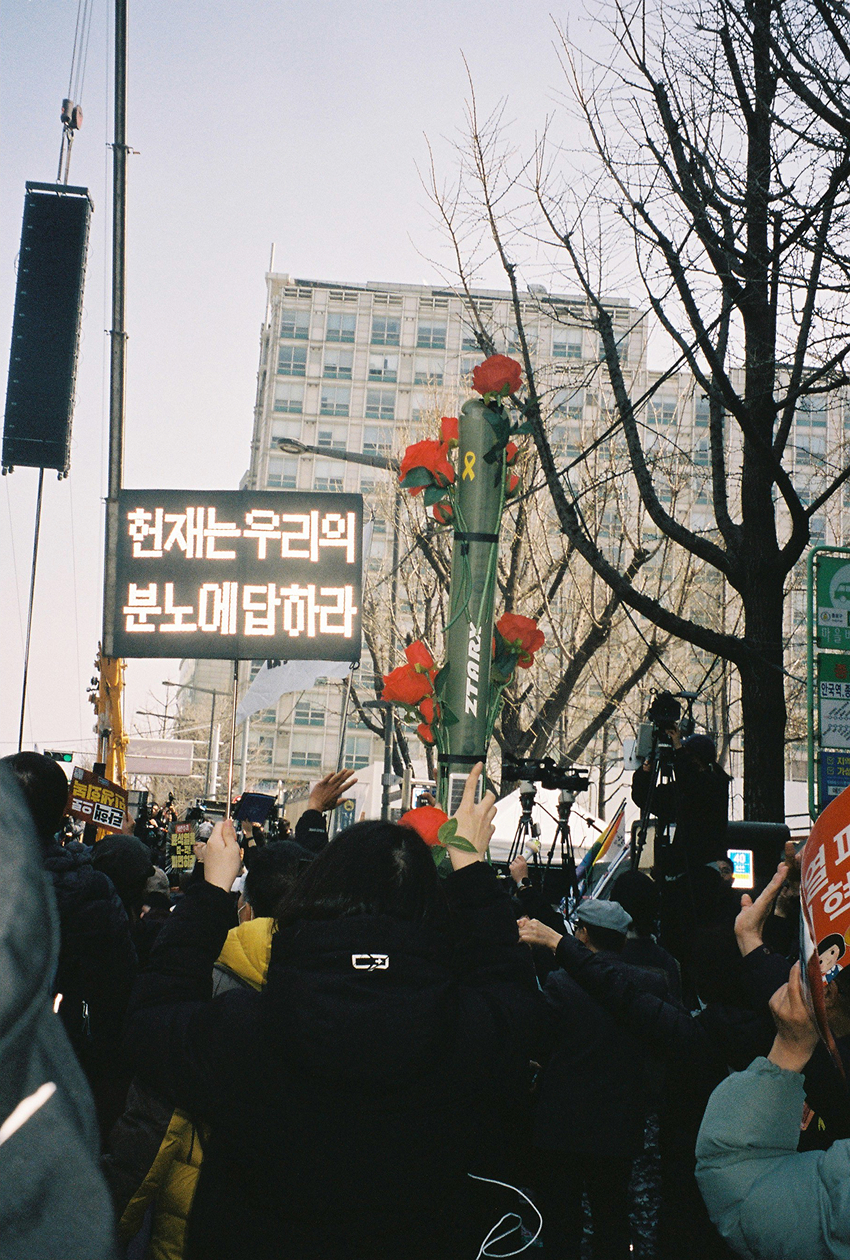
The night of martial law. On weekdays, my photography classes usually run late into the evening. Women’s university protests, alcoholism, the death of a friend. Each of us stands on our own front line, taking photographs. One friend began to speak about their father and how he had stood in the second row of the protesters during the May 18 Gwangju uprising. A father who had lost a friend brutally, a father who spares his words. Someone I met in Gwangju once told me that every May, bruises rise to the surface of their skin. That even in their dreams, the coffins of the dead open wide. Turning those scenes over and over, we ate. My phone was dead, and it was someone I was eating with who told me: martial law. Martial law? Martial law. Martial law. Was this a phrase that could rise again? I grabbed my camera and went to take photographs. I think I saw ghosts there.
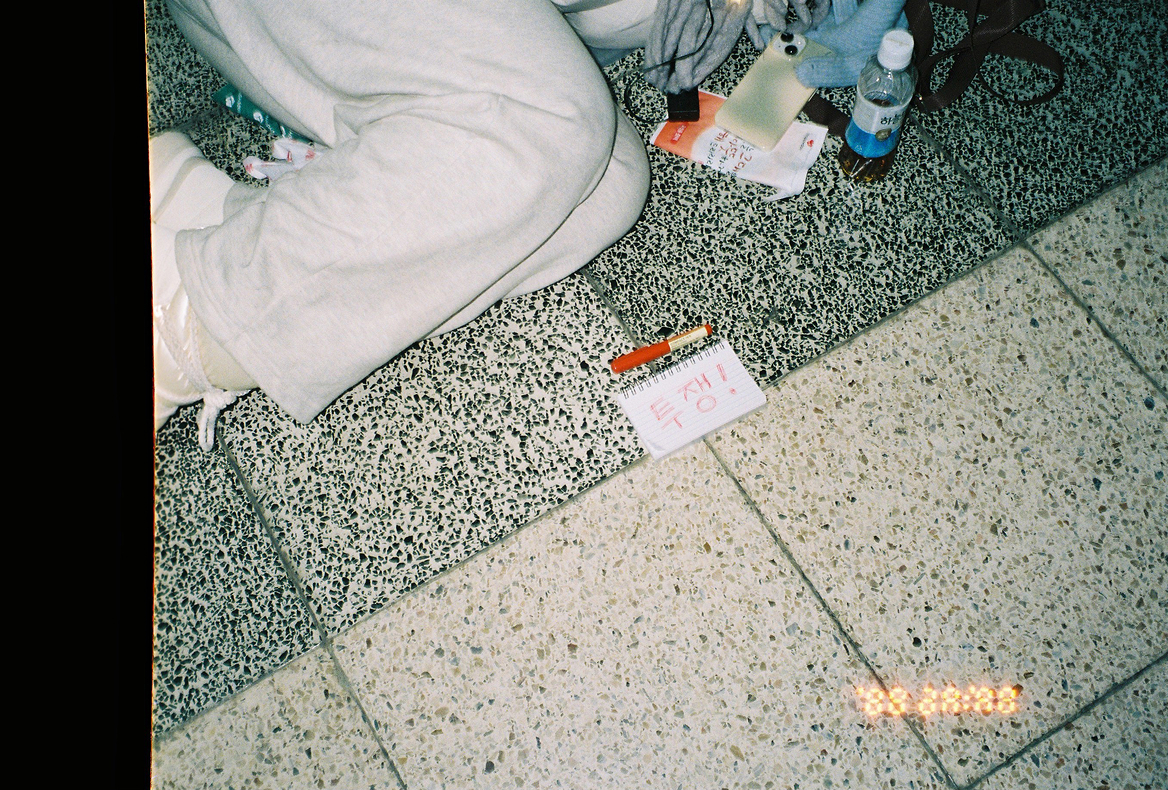
Gwanghwamun, Impeachment Motion Passed
24.12.14
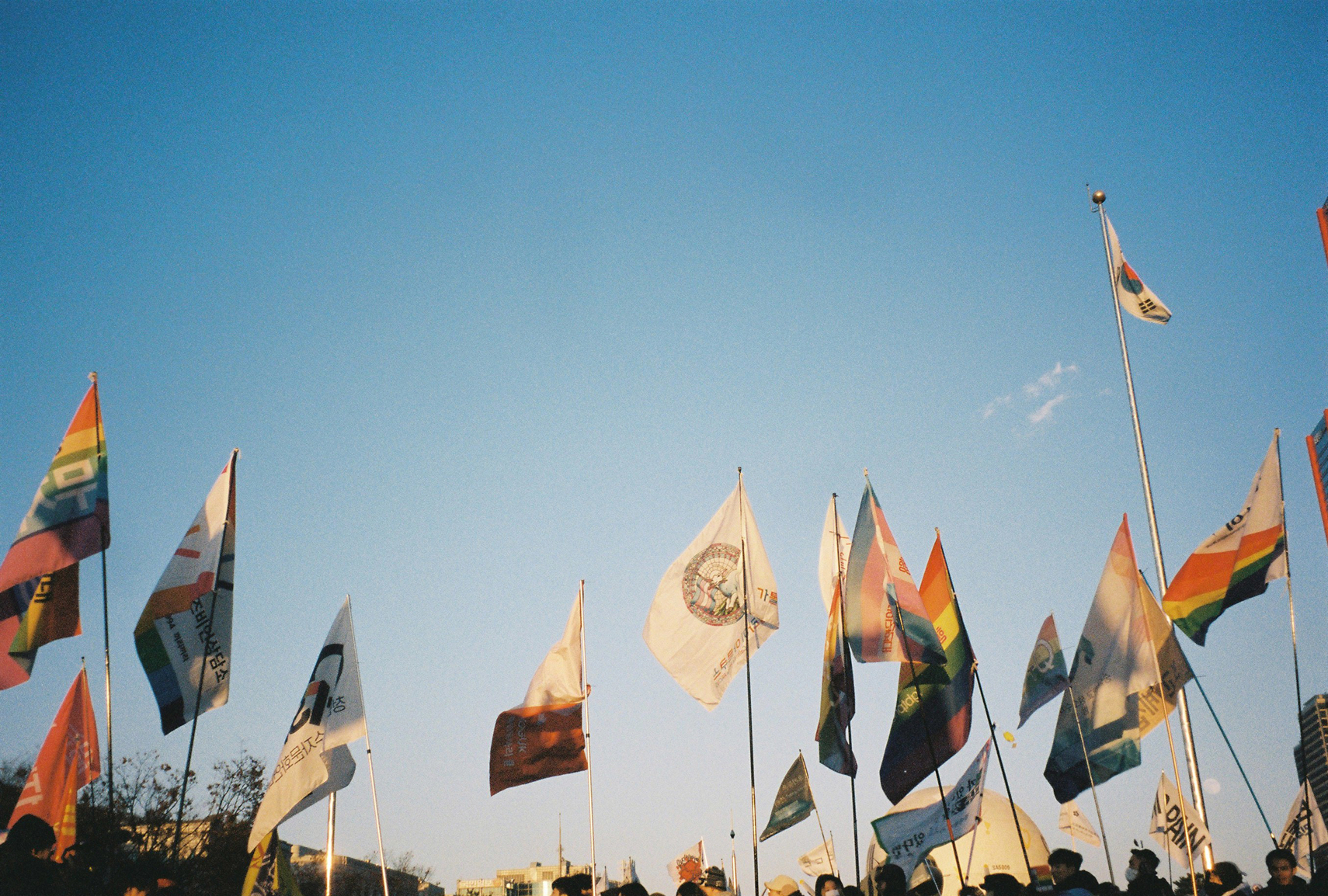
It was as if the fact that painful times and gentle times arrive together was driving me utterly, utterly mad. Despair is swift, and hope casts a wide net. I had hoped to spend the end of the year traveling here and there while I waited for announcements of things that might or might not come through. Then again time—the tension of time—was never something that moved according to my will. I knew that. Or did I not? There was this one day I got to class just before the lesson began, and the students scolded me for cutting it so close. That was funny, and helped lift my spirits. Thanks to that class, I am learning about the protests taking place across the country, and about the past each person carries, and about the dead. The poetry of Seungja Choi keeps hovering on my lips. (I do not know you / I do not know you / (…) / That I am alive, this is nothing more than an eternal rumor.) I do not know. I am ashamed. The body. The naked eye. The time of the road, or the winter wind. I want this shame to become the pretext for my vision to clear.
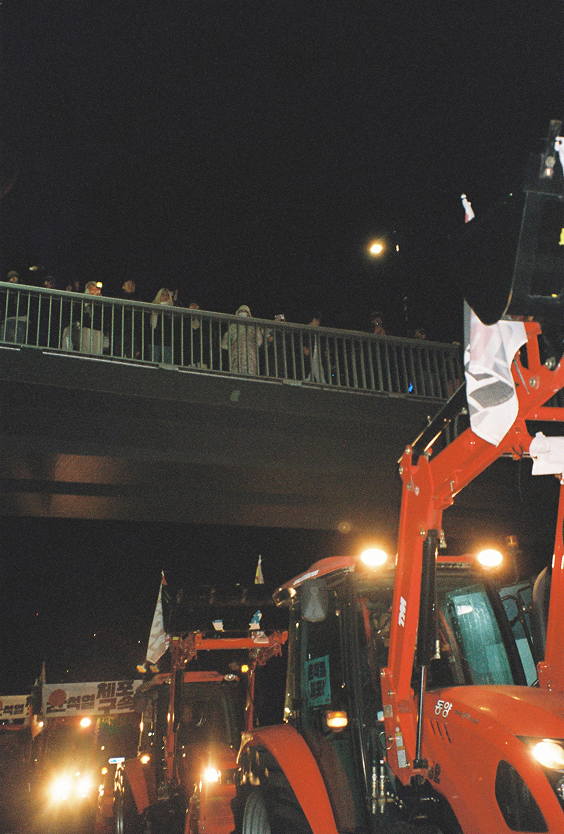
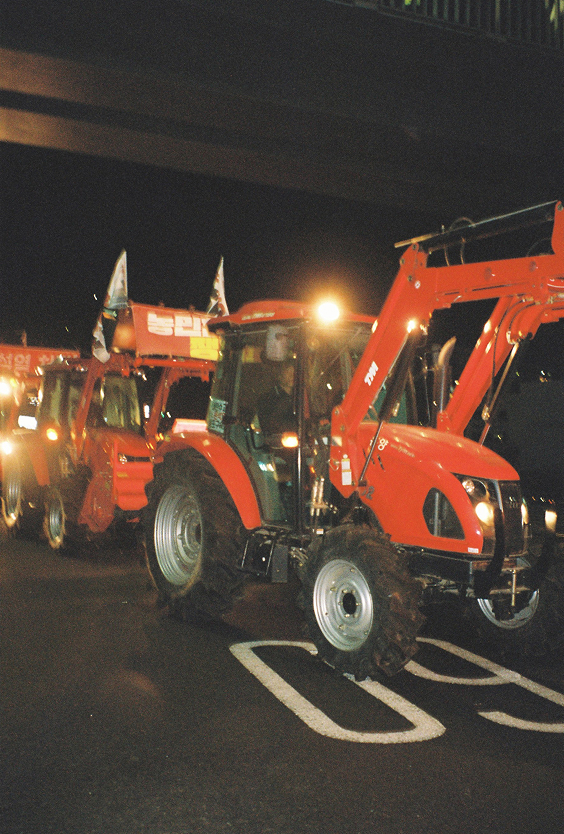
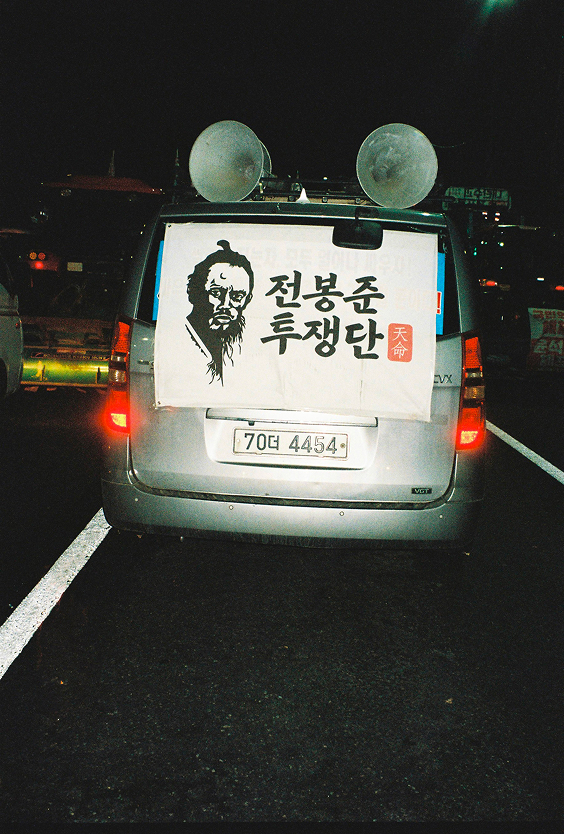
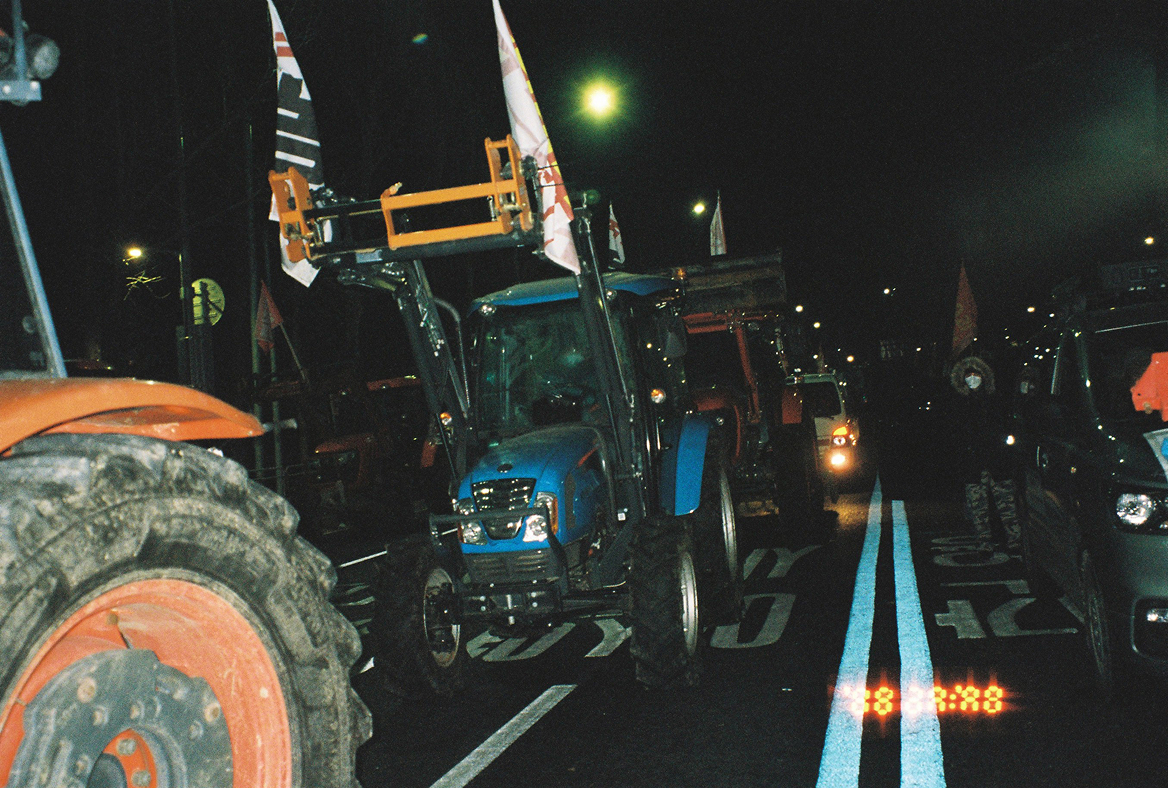
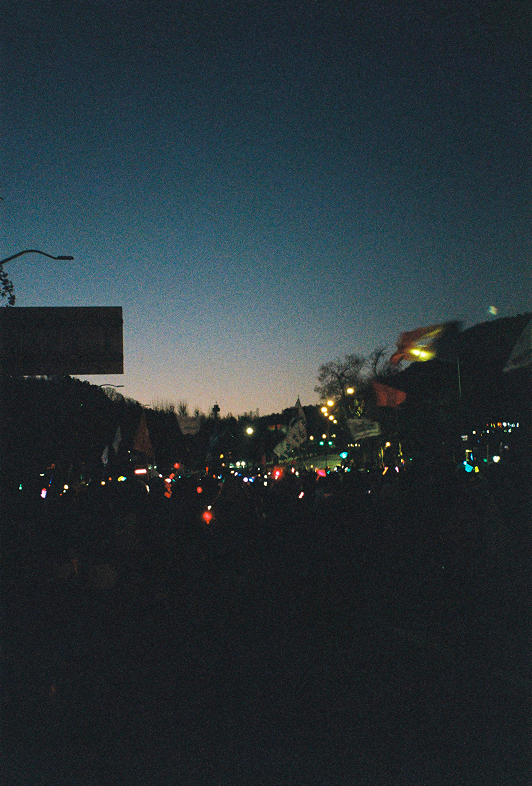
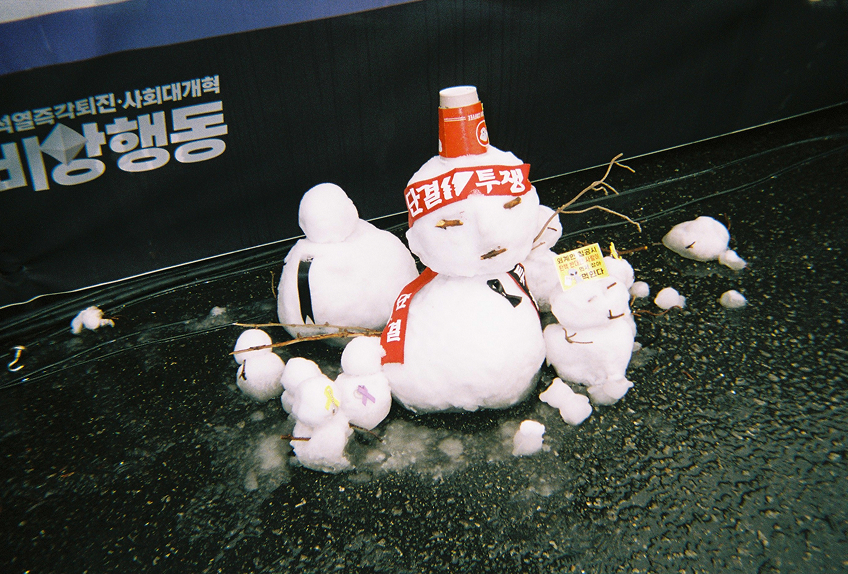
Namtaeryeong, standing with the Jeon Bong-jun Action Corps
24.12.21 - 24.12.22
As a young person, I defied and fought the system; I was a whistleblower of private-school corruption, and of sexual violence within the photography scene. This left me deeply exhausted, disappointed by the atmosphere of the society that came for me on all sides. Did I even actually put up a proper fight? Was I merely throwing a tantrum? There have been times when those years feel like a kind of deep oblivion, or an experience of defeat—and in those times I would do everything in my power to forget them entirely. A few months ago, the round faces of those who had fought at my side came back to me, and I wept without making a sound, alone at home. A coalition to monitor sexual violence in the photography world. There had been such a thing, yes. My own father’s name had been on that list, too.
Will it help if I make my body bigger, or just get older? Will I win? Without giving myself any time to look back, I worked and made work. Some days I was loose, on others I would turn my head away from one issue or another. When my work became gentle, things were, in a way, comfortable. Because when you fight, you end up battered. Lying blankly in bed. Even now, I often just lie there, no different from back then. The teacher who used to scold me out of my gloom died while helping students during the Sewol Ferry Disaster. The promise I had made to myself—to grow into a good adult and go back to see him—became a visit of condolence instead. For three years now I have been living in Itaewon. So many fellow citizens lost, so cruelly. How can I ever possibly love this country? But then, watching the sun set, slow and easy after long hours spent with friends, the Han River—it’s all so beautiful. But then, this place is so relentlessly interesting. And so, not knowing how to fight properly, and not knowing when to leave, I just carried on, unable to let go.
It was photography and my colleagues that snapped me out of this state. An older friend who was a protest enthusiast, who knew the smell of burning human flesh. One who knew how to make Molotov cocktails with astonishing expertise. Colleagues who were so used to their cameras getting soaked by water cannons that they always carried two on their person.
Even under a relatively democratic president, farmers still died. Did you know that? a colleague asked, and I shook my head. Is not knowing something always this shameful? That was when I learned that suspicion and questioning, too, can be another form of solidarity. When martial law was decreed, I just took myself straight to the National Assembly. We hadn’t been in touch, but those colleagues were all there.
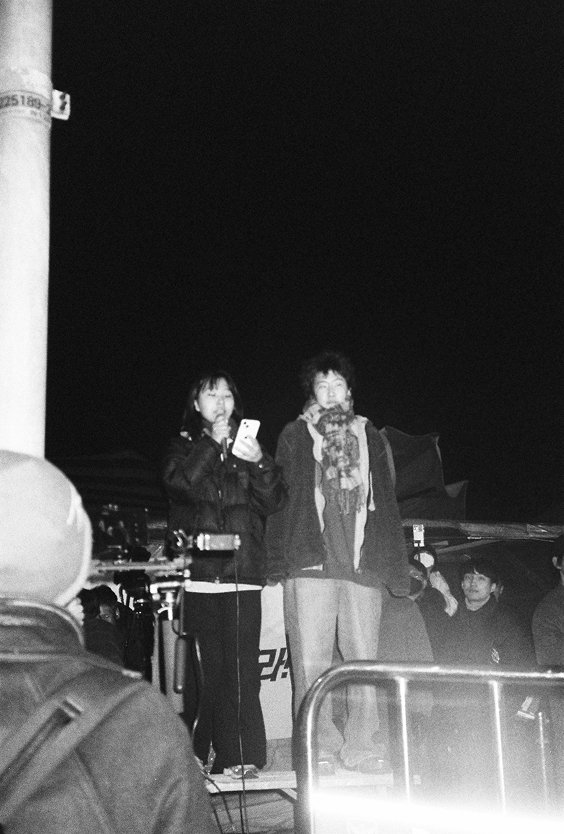
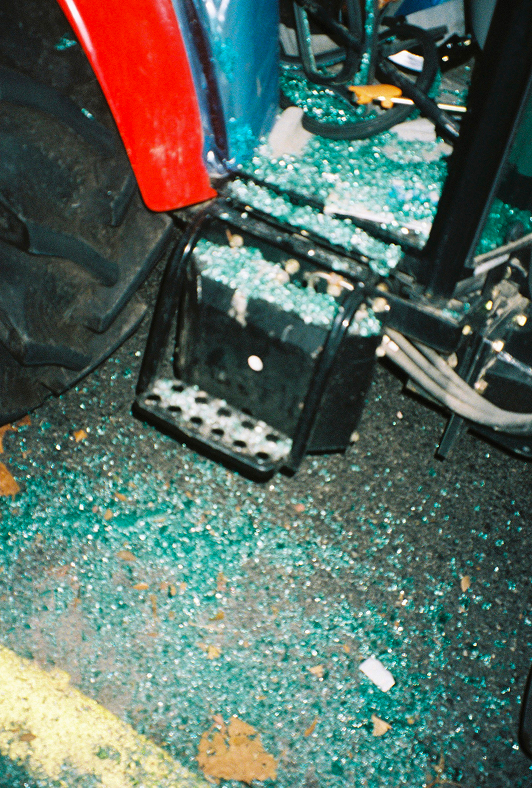
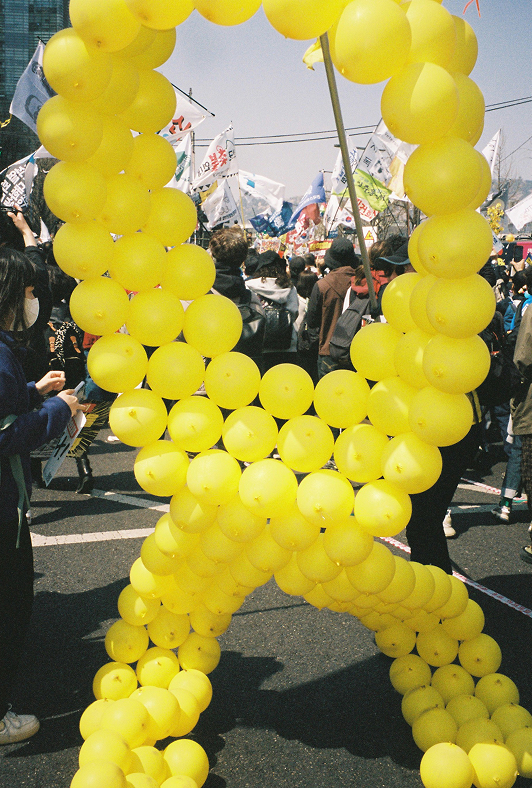
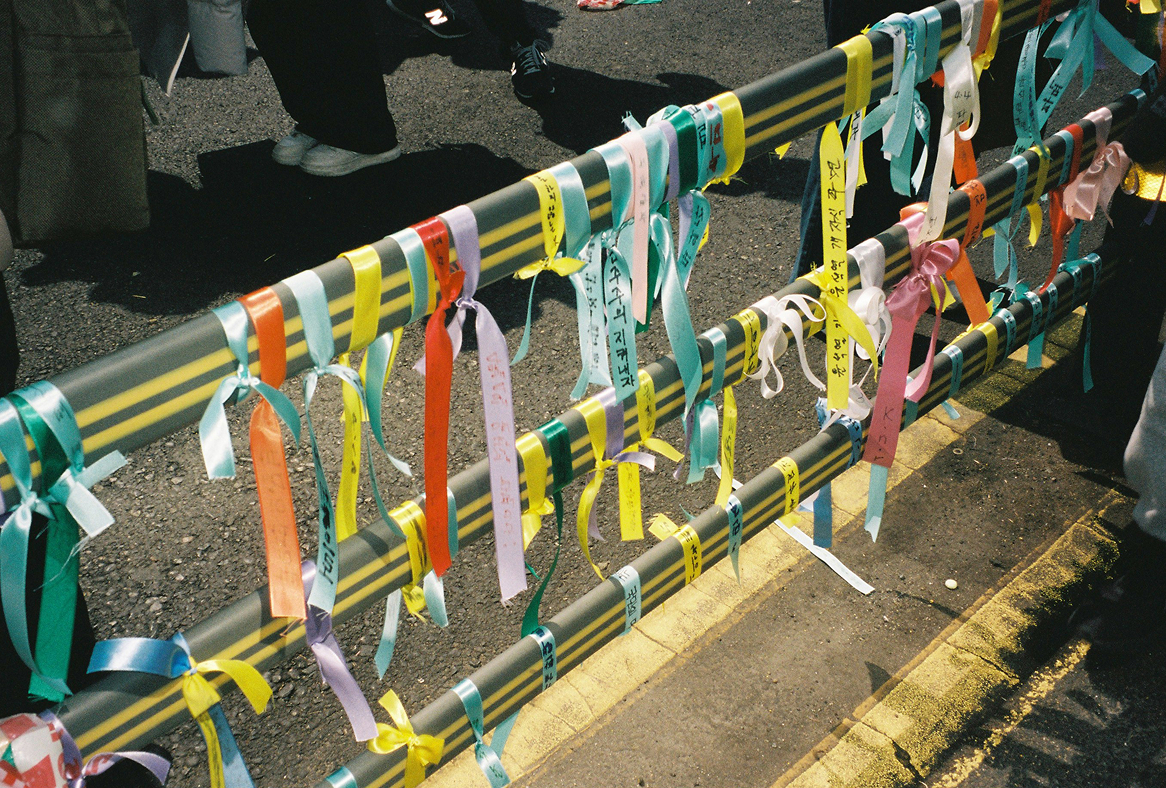
Namtaeryeong. The shattered glass of the tractor windows kept weighing on my mind, and so I went. Among the women, all trembling in the cold, I trembled, too. I had come alone, and before I knew it cold-weather gear was being thrust into my hands. Young girls shouted, “We greet you in struggle. Struggle!” I tried revising a speech I wasn’t going to give. On that cold asphalt, I felt myself gradually coming awake. Once, I joined the walking march for Kim Jin-sook’s Reinstatement Struggle at Hanjin Heavy Industries and handed her a book I had written. When the activist Miryu ended their 46-day hunger strike for the enactment of an anti-discrimination law, Kim Jin-sook referenced a quote from that book: “You who have shed your own blood, it is our spring. Now, it is our spring.” The solo exhibition I put together after the fight, weeping and wailing. After seeing that exhibition, the activist Hyewon sent me a postcard saying that it made her realize: To speak about myself and the world surrounding me is nothing to be ashamed of. I was there, in the gwangjang. I needed to keep being there. I must not become narrow. In the street, so many people come to mind. Bone-piercing cold. Solidarity being inscribed, precise, into the ribcage. I have a feeling that when I grow petty, this will be the experience that yanks me up by the hair.
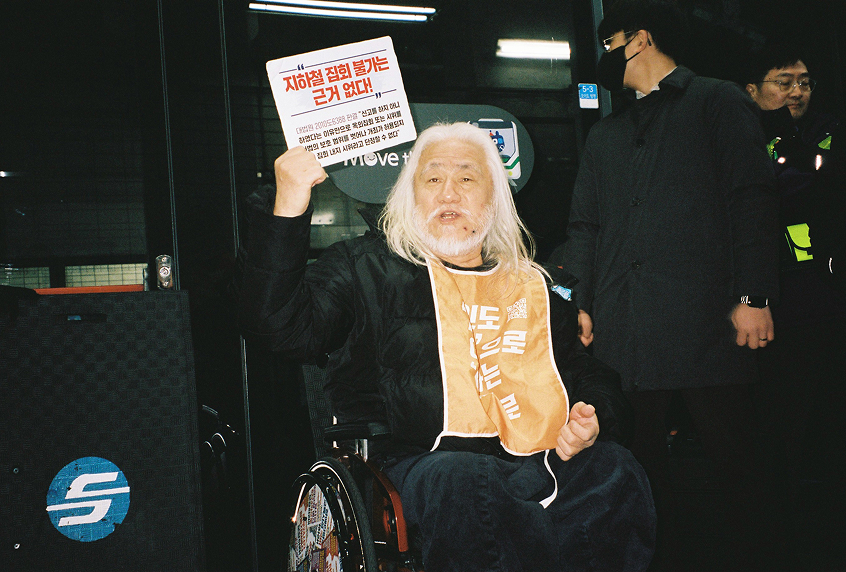
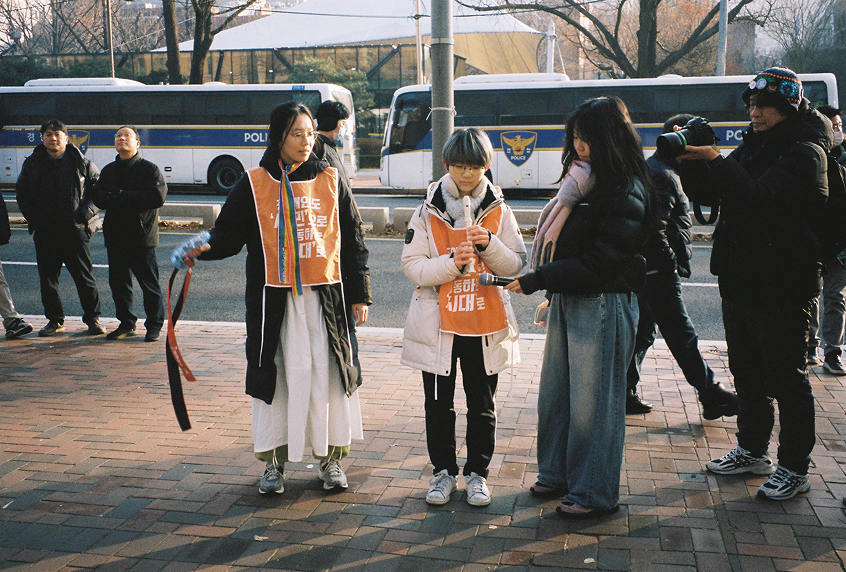
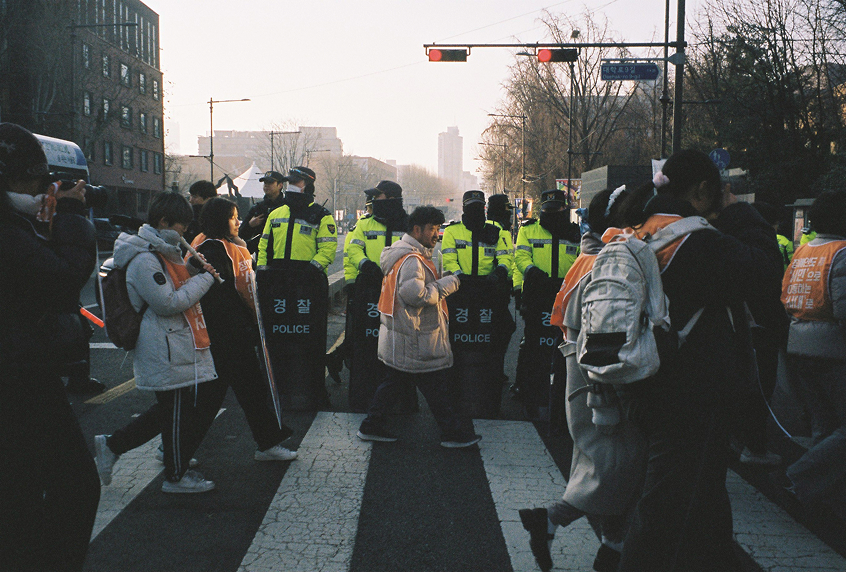
After Namtaeryeong
24.12.22
When I got home after staying up all night at Namtaeryeong, it struck me that I needed to mark the occasion with a photograph. My skin and lips were chapped, my face haggard. In the developed photograph, I looked so much like a dejected puppy that I couldn’t help but laugh. Mornings used to be easy to erase, but lately I end up seeing quite a few dawns. The color temperature at sunrise and at sunset is the same, come to think of it, yes. At daybreak, there is something like a shimmer of life.
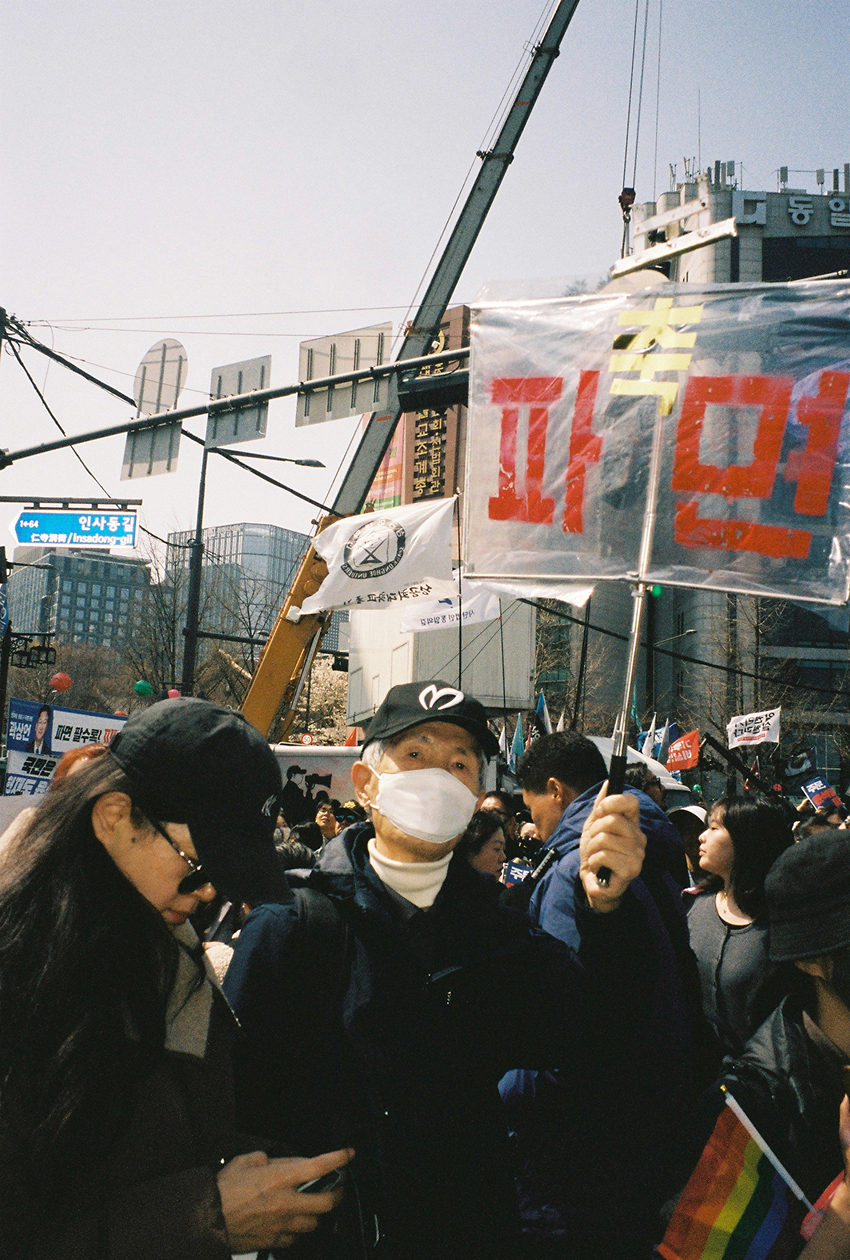
Hyehwa, standing with “Solidarity Against Disability
Discrimination”
25.1.17
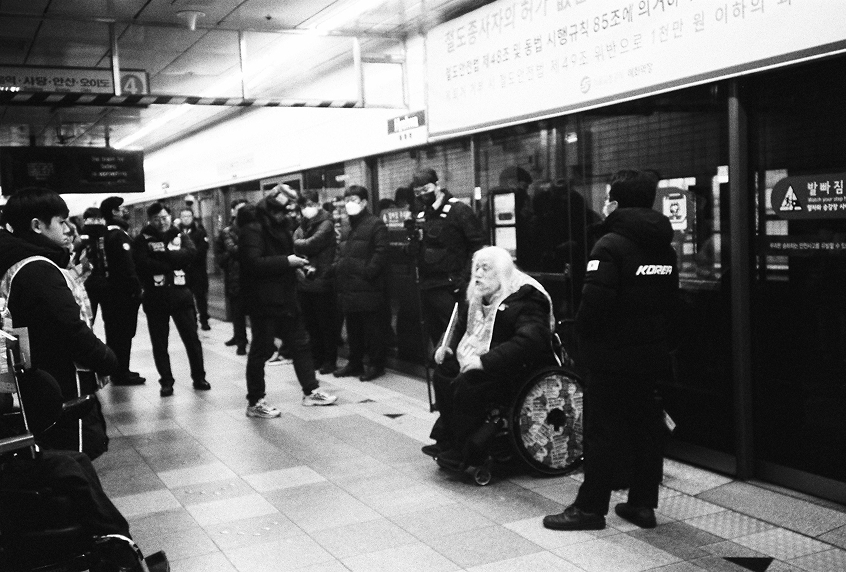
I took my grandfather to the nursing home (or left him there, or placed him there; I don’t know how to put it), and in the same week I went to a protest held by “Solidarity Against Disability Discrimination.” From the moment he began to struggle with mobility, my grandfather considered himself useless, to be treated as an object. Director Park Gyeong-seok said to the people around him that there will inevitably come a time when they too feel themselves becoming useless. Use. After watching the scene grinding against history, I slipped out of the station. The path was lined with police and protesters. Steam billowing up from cookers. The past, the old city, oral histories and silence, all in a rush. I had to witness that vapor, and it was not something I could explain to anyone.