Men [and women] fight and lose the battle, and the thing
that they fought for comes about in spite of their defeat,
and when it comes turns out not to be what they meant, and
other men [and women] have to fight for what they meant
under another name.
William Morris, The Dream of John Ball (1887)
The Korean Pavilion of the 61st Venice Biennale has been designed as a “Liberation Space” monument by Artistic Director Binna Choi.1 By “Liberation Space,” Choi refers to a discrete historical period in Korea’s history and to a broader set of questions about the nature of liberation and nationhood today. The term “Liberation Space” (Haebang Gonggan (해방공간)) emerged from efforts by Korean historians and literary critics to re-conceptualize the period following liberation from Japanese colonial rule in August 1945 to the establishment of the Republic of Korea in 1948 or to the outbreak of the Korean War in 1950 as a distinctive aesthetic and discursive field or space. Part of a larger undertaking that began in the late 1970’s to re-assess Korean history by jettisoning its dominant anti-communist and Cold War framework, Haebang Gonggan reinterpreted the post-liberation years as an expression of indigenous national agency to capture the intense energy for nation building and the fluidity of political and social conditions in which those efforts unfolded. No longer viewed as merely chronological, Haebang Gonggan came to signify a dynamic space of colliding political forces within a contradictory Korean modernity and post coloniality.2
As many will know, the initial possibilities of this post-colonial emancipatory moment were tragically foreclosed or “fractured” by the occupying United States military government, by permanent partition, and then by a civil war fought on Cold War terms and by foreign powers.3 But liberation spaces have their own sovereignties, temporalities, and modes of inheritance, situated as they or elements of them are in what I’ve called the utopian margins.4 In this brief essay, I approach this historical moment from the vantage of the 1948 Yeosun Uprising (여순 사건), a dissonant angle, from which some pertinent questions for today arise concerning shifts in the 1948 global order, militarism and the role of the soldier, and the ongoing work of liberation. The essay is woefully incomplete, barely touching on the historical details and the larger complexities, merely one small voice in and alongside the assemblage that is Liberation Space: Fortress/Nest.
ONE LAST GREAT EFFORT
On 19 October 1948 when the order to deploy arrived, a group of approximately forty soldiers from the 14th regiment stationed in Yeosu (여수)—reportedly led by Sergeant Ji Changsoo (지창수), Lt. Kim Jihoe (김지회) and Hong Soonseok (홍순석)—declared themselves the Jeju Subjugation Dispatch Refusal Soldiers Committee (제주토벌출동거부병사위원회). Organizing quickly, they convinced about two thirds of the 2500-strong newly formed regiment of young men to join them in refusing orders to deploy to Jeju Island (제주도) where the new President Syngman Rhee (이승만) had launched a scorched-earth counterinsurgency program against the opposition in Jeju to Rhee’s government, to partition, to the de facto U.S. occupation of Korea, and to the political-economic order that occupation and division imposed.5 They issued a manifesto, whose provenance remains contested, which explained the soldier’s refusal to “massacre our compatriots” and emphasized two key points: “die-hard opposition to fratricide” and “immediate withdrawal of U.S troops.”6
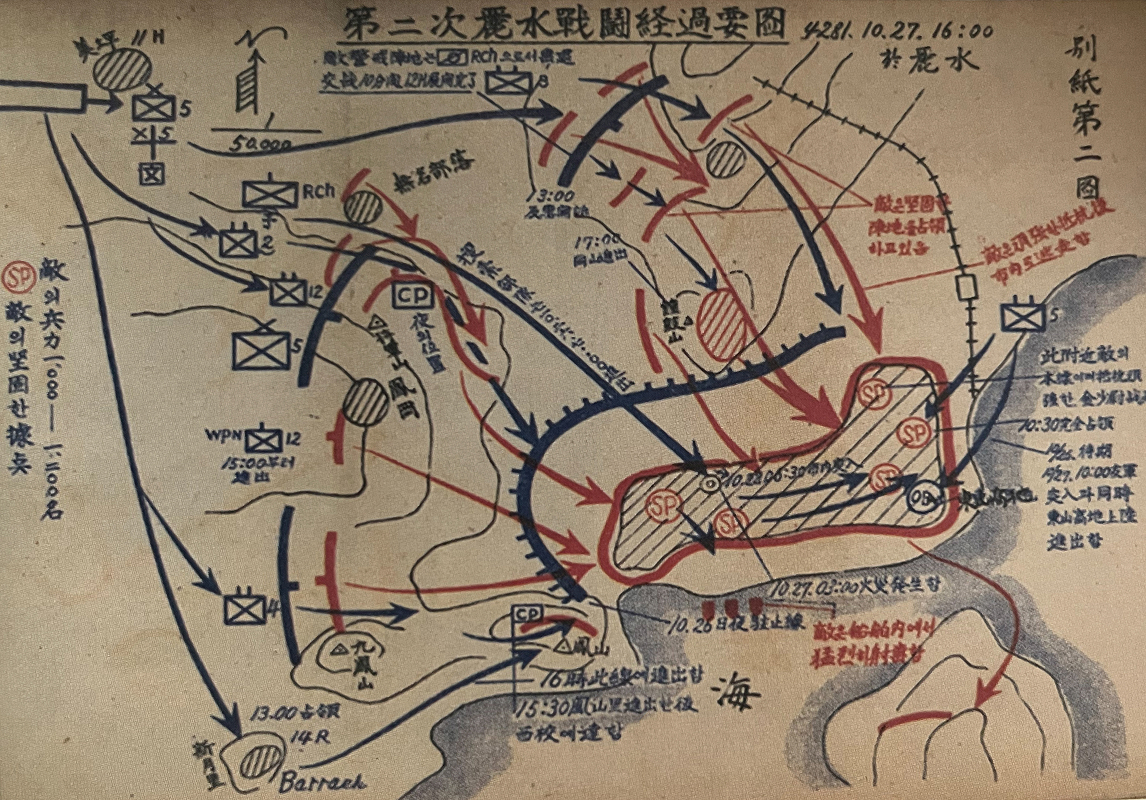
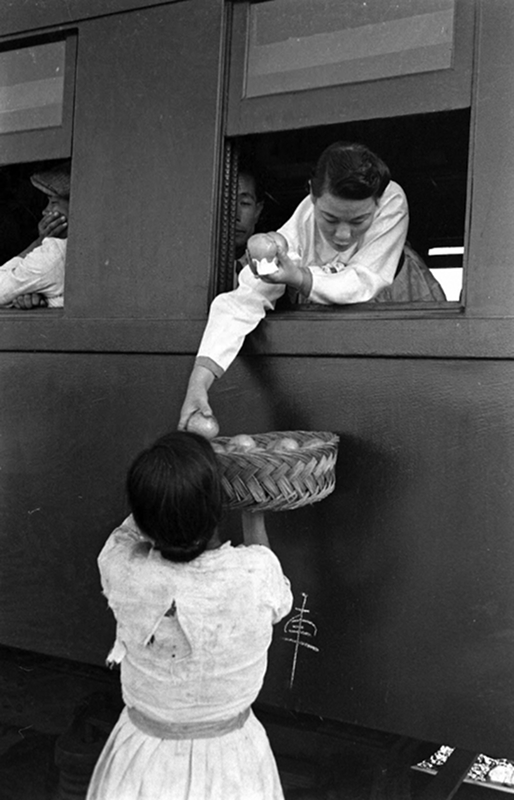
The rebel soldiers made their way in three units along three different routes to the station in Mipyeong (미평) where they boarded trains going north to Suncheon (순천), some remaining in Yeosu where they helped the large numbers of people who joined them to take over Yeosu and then Suncheon, Gwangyang (광양), Boseong (보성), Gurye (구례), and Gokseong (곡성). People were ready—prepared—for the soldiers’ arrival even though they had no advance knowledge of it. By preparation, I mean a political awareness that doesn’t call attention to itself and is both embodied and instantiated in ordinary practices of communal everyday life—forms of knowledge, cooperation and support—that are not yet organized as a visible or explicit political agency. Rather, preparation is a discreet, sometimes deliberately secretive, steady readiness for a moment of collective mobilization that may or may not arrive. Preparation is rarely announced because to announce it is to render it into an outlaw activity best avoided, or, because you don’t even know you’re preparing (yet).7
It's important to emphasize how significant this preparation was. The soldier uprising—by all accounts planned in less than a week and certainly not coordinated with external agencies, notwithstanding the presence of members of the South Korean Worker's Party in the regiment—re-activated a popular opposition and popular forms of governance—the people’s committee, the original form of the post-colonial nation state—which had seemed on the surface to have been crushed after the suppression of the Daegu (대구) /Autumn general strike in September of 1946 (in which even some members of the new Korean navy joined the strike) and the subsequent imposition of martial law in October.8 Despite all the efforts to close it, and even after the contested elections in August, heavily boycotted on Jeju and in South Jeolla Province (전라남도), the liberation space was still open in late Autumn 1948, quietly keeping prepared for another opportunity in its own good time and métier. That opportunity arrived and, defying the usual pattern, the soldiers did not merely refuse orders or escape; nor was their disobedience in the service of taking power or establishing military rule. Rather, they refused what they saw as unjust and impossible orders and cleared the path for civil forces to pursue broader socio-political aims.
There was one, possibly more, people’s assemblies held in the center of downtown Yeosu, where some believe the charismatic Sergeant Ji Changsoo made a speech, a newspaper was published (the Yeosu People’s News (여수 인민보)) and the People’s Committee got to work, along with their allies in the Women’s, Labor and Student Unions. They issued a six-point resolution, which repeated unmet demands made in 1945 by the People’s Republic of Korea (조선인민공화국), the nation-state originally declared by the anti-colonial independence movement: land reform; confiscation of land from pro-Japanese landowners and its redistribution to poor Korean farmers; labor rights; political rights to free speech and assembly and against re-colonization; equal rights for women; punishment of collaborators and pro-Japanese police. In October of 1948, it was now necessary to add a new point: rejection of Rhee’s newly pronounced nation-state and allegiance to the People’s Republic of Korea, “the only unified national government.”9
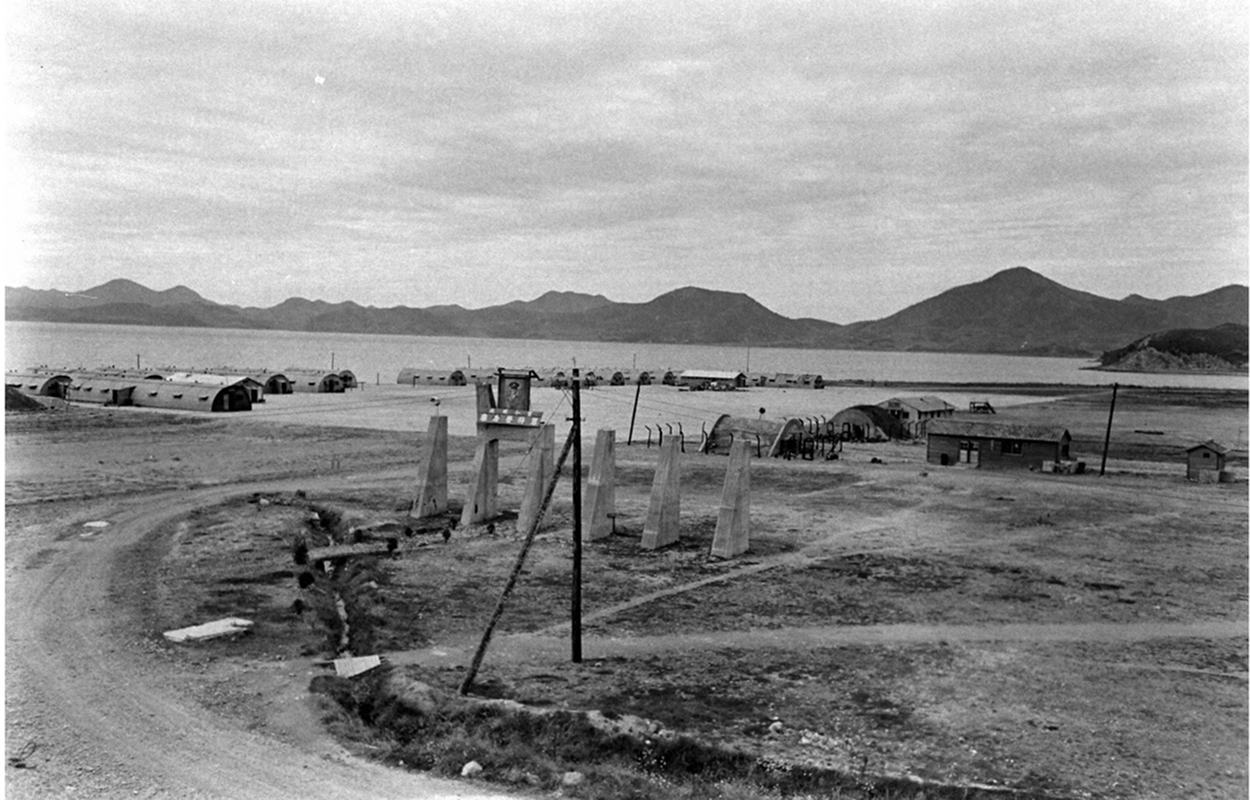
By 22 October, the Yeosu People’s Committee had taken over all city and county administrative operations. Combining punitive and transformative actions, police stations were taken over, bank accounts frozen, businesses expropriated. The food distribution centers were reopened and rice given away for free (and shoes too), money was lent to working people at no interest, and worker autonomy committees managed the expropriated businesses. The same happened in Gurye, in Suncheon and elsewhere locally in the surrounding communities from which the soldiers had been recruited.
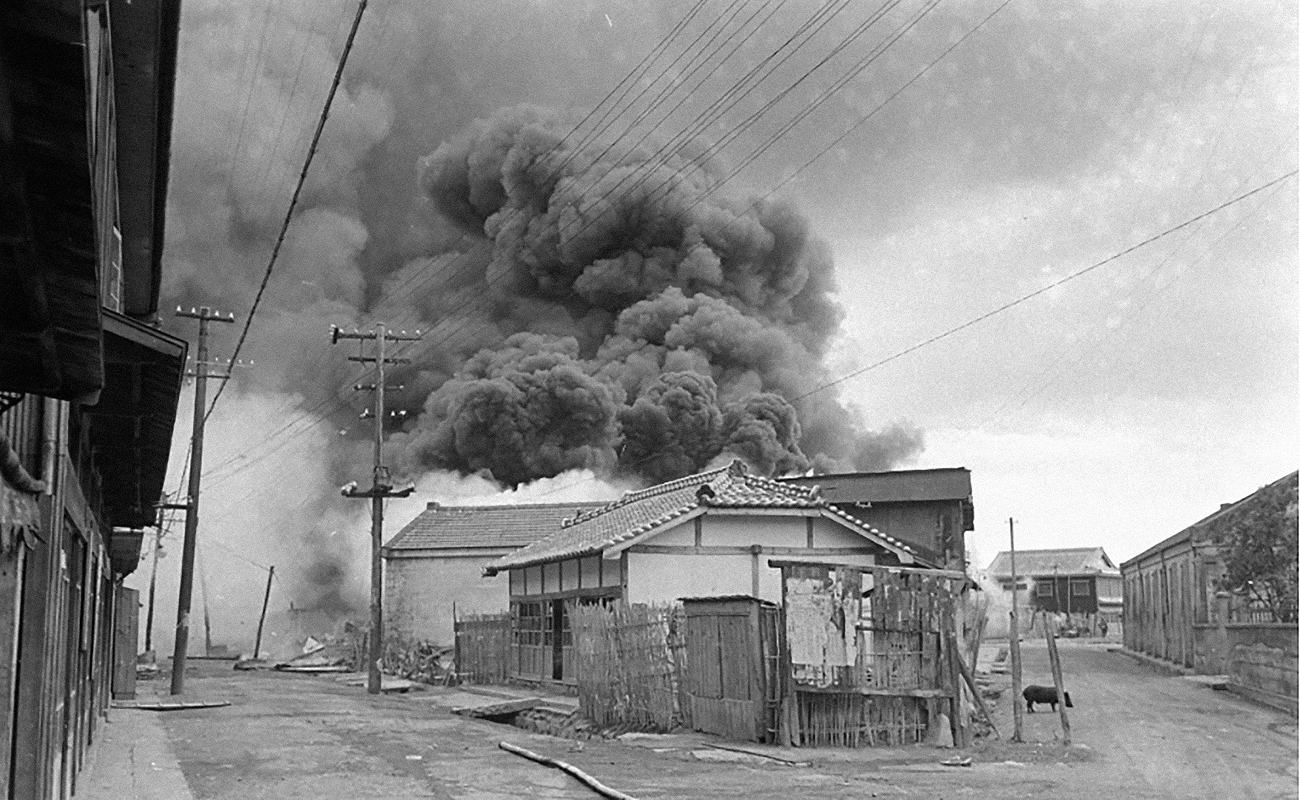
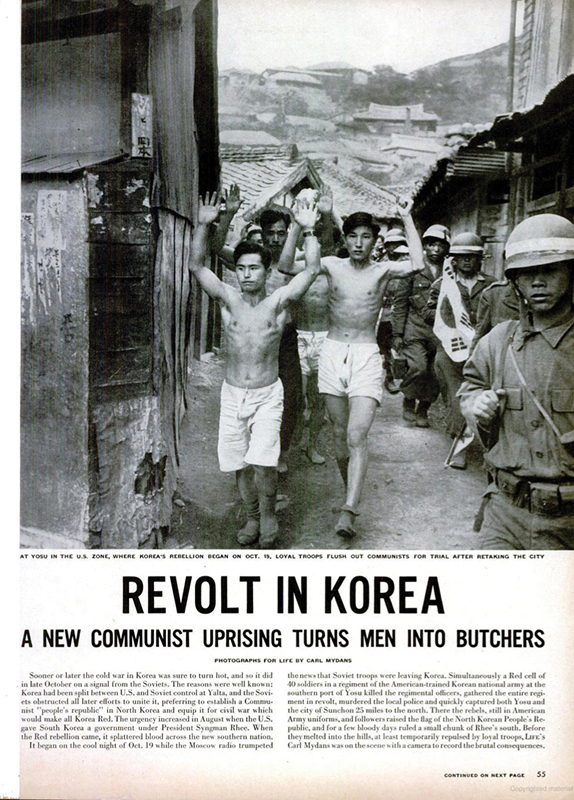
The soldier revolt and the people’s initiative it prompted were contained quickly. The United States sent in advisers and journalists and helped the Korean Army coordinate a counteroffensive with command in Gwangju (광주). On 22 October, martial law was declared in Yeosu and Suncheon and government forces advanced to Suncheon re-capturing it by evening; by 27 October, they had recaptured Yeosu, burning large parts of the city to the ground. The one-week experiment in self-governance was over. The remaining rebel army—about 1,000 strong—fled into Jiri Mountain (지리산) through Gurye via Baekun Mountain (백운산) in Gwangyang (광양시), the salt marshes of Suncheon, and the Seonjim River (섬진강), becoming part of the small nascent partisan force gathering there. (And effectively creating a real partisan army for what it saw as a war of national liberation and unification.) The soldiers who were not killed in the street battles or fled into the mountains were arrested and executed immediately or sent to the prison in Daegu (대구교도소) where they were summarily court martialed or executed after the 1950 official start of the Korean War.
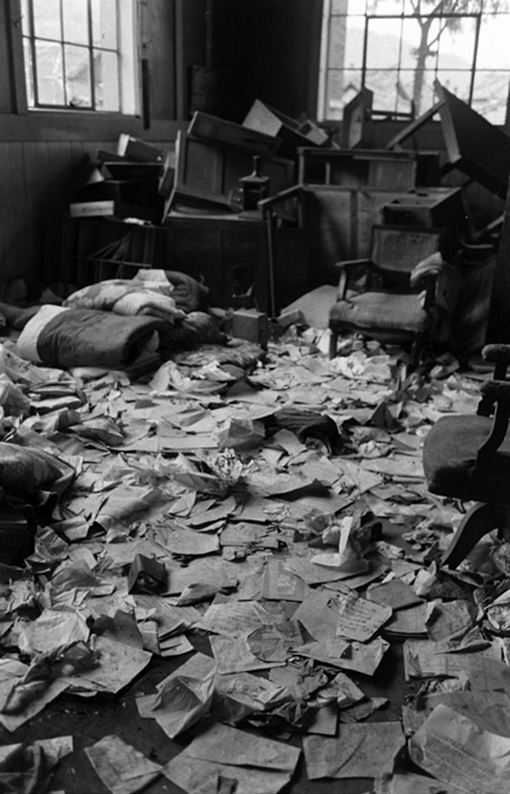
In the suppression of the uprising, thousands of people—communists, socialists, egalitarians, farmers, feminists, traditional mothers, unionists, teachers, high school students—anyone who might have held even a mere desire for a different kind of lifeworld were summarily executed or imprisoned. These anybodies (or nobodies) were a many: the overwhelming majority of the Korean people desired a self-governing egalitarian and democratic society, as the U.S. Army's own surveys confirmed.10 To exterminate that desire was the clear and explicit objective of all the so-called pacification campaigns and thousands were killed or their lives permanently maimed towards that end. The new Korean Army was purged of its leftist, anti-imperialist and progressive nationalist elements while paramilitary right-wing groups were recruited and armed. Newspapers were closed and a collective punishment of guilt by association (연좌제) was imposed on the family members of participants and suspected participants. Records of what happened and of the soldiers were erased and destroyed, adding to the country’s increasing population of the disappeared.11 Even Jiri Mountain and Halla Mountain (한라산) were legally "prohibited” until 1955. In December 1948, the National Security Act (국가보안법) was enacted, which outlawed and permitted the death penalty for “anti-state activities,” setting the ordering terms for the sequence of autocratic regimes and military dictatorships that characterized South Korea until 1987. While amended, the National Security Law has never been repealed.
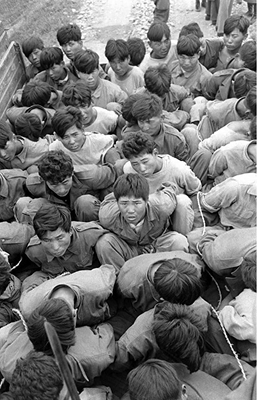
Rebel soldiers arrested. 1948. Photograph by Carl Mydans.
EMANCIPATION CIRCUIT
There were three weeks of utter start-all-over freedom between the surrender of Japan on 15 August 1945 and the establishment of the U.S. military occupation government (USAMGIK) on 8 September. People entered the Liberation Space with a range of feelings, a paucity of resources, a ragtag national liberation organization just returning home or leaving prison, and long historical memories. And, they stretched those three weeks as far as they could go. "Peasants occupied Japanese owned farmlands, workers seized control of the factory floor, villagers chased the former colonial police out of town, women demanded political and economic equality."12 Even soldiers and sailors sometimes joined strikes and did not follow orders they thought were wrong. Between those three weeks of start-all-over freedom in 1945 and the late autumn of 1948, amidst increasing restrictions by the United States, the aspirations of liberation which 1945 occasioned took form throughout Korea. Kornel Chang has recently described this period as Korea's "Asian Spring." Because so much of the enormous effort and the spirit of the effort during these years were oriented towards reconstruction and building a new nation, we might fruitfully see this time as an “emancipation circuit,” Thulani Davis’s name for the alternative infrastructure for life built by Black Americans in the immediate post-Civil War United States. 13
The creation of this emancipation circuit was remarkable. It is perhaps difficult today to imagine the extraordinary will and purpose people possessed after almost forty years of a brutal colonial occupation by Japan, which involved forced modernization, itself set upon a stagnant and profoundly stratified and unequal society—Joseon (조선)—that had only abolished hereditary slavery in 1894 as it was starting its fatal collapse. What resilience and optimism it took to re-make a world, to create a nation, so exhausted and dispersed in 1945 and then still to make another effort—however fractious and chaotic—to take hold of the whole direction of the country again in late 1948 after it was becoming clear that the terms of post-colonial life on offer were not available for popular direction and control.
For a brief time, the question of the socio-political-economic terms of post-war, post-colonial reconstruction were resoundingly answered. That answer and its vision was nothing like the United States’ vision, which offered a partitioned Korea as the forward base in the struggle against communism and the showcase of a capitalist democracy whose terrible terms of primitive accumulation and development would be unspoken or dismissed. Nor was it anything like the authoritarian socialist command economy the Soviet model in the north of the country offered. It was something else, a something else consistently misrepresented and maligned; a something else searching for the right social forms to realize itself.
That something else was new, a hope for a real post-colonial life without misery and subjugation entirely modern in its shape and character. It was also deeply and profoundly connected to a long history of oppression and rebellion: the first item on the list of People's Committee actions in 1948 was land reform, which had been a demand for over 150 years, conjuring the specter of the 1894 Donghak (동학) and earlier peasant uprisings; just as Yeosu will become part, a remnant, of what 1948 will come to mean after, in 1980 Gwangju (5.18) and in 2024 Seoul (12.3).
That something else in the late autumn of 1948 in Yeosu was the last great effort before full-scale war and its immense unmeasurable destruction, an attempt to re-start the emancipation circuit, a second opportunity for the Americans, which they deliberately squandered.14 The 1948 Yeosun uprising was a fork in the historical road in which a different mode of freedom and democracy, a different national architecture of independence and autonomy, might have been possible than the path set by the new American military empire and its hysterical and uncompromising anti-communism.
FORKS IN THE ROAD
What happened in Jeju and in Yeosu in 1948 confirmed the path to war and authoritarianism in Korea. That tragedy crosses, in attenuated ways, the geopolitical order that 1948 more broadly signifies, including the utter defeat of the Japanese empire, the rise of a U.S. military empire dedicated to the eradication of all socialist, communistic and popular democratic impulses, and the start of the ongoing Nakba regime. As the post-World War II order firmly in place by 1948 mutates, shifts its center of gravity, and transitions to we know not where exactly, 1948 appears as specter and also as prophecy. The militarism and military outposts that were at the very center of the wealth and power of the new United States empire and of the geopolitical mapping in which Korea (and Japan and Germany) were so central is today a vast transnational military security carceral machine, taken as permanent and unbreakable, no longer bound by older binary ideological parameters.15
The urgent question of militarism today highlights the significance of the 1948 uprising by the 14th regiment. There is a longer transnational history of soldiers who are absent without leave in the broadest sense: who refuse to enlist or be conscripted in the first place; who keep secret or whisper furtively their unsettled dissatisfaction with the whole business; who cleverly find ways to sabotage war from within; who leave in the midst or later; who actively refuse orders; and who organize politically against war itself or for causes their job is to subjugate. Despite the graffiti message commonly left by World War I soldiers in the trenches—mutiny is the conscience of war—most disobedient soldiers are not mutineers or strikers, that is, collectively organized rebels. There is an inspiring history of the ones who were—from Cesar's Gallic conscripts to the Sepoy guard to David Fagan and the Black "Smoked" Yankees in the Philippine-American War to the Kiel and Kronstadt sailors to the American soldiers in Vietnam with their more than 140 underground newspapers to the Iraq Veterans Against the War and the rather remarkable Veterans Stand for Standing Rock, who mustered in the thousands to defend the Dakota Sioux water protectors. I would place the 14th regiment rebels in this history, even though some—possibly up to a third—clearly took the opportunity of the uprising and chaos that ensued to go fugitive: to run away and hide; to escape and clandestinely help re-establish the People's Committees in their hometowns or to harbor and help feed the rebel soldiers; in a few cases to run away to join the other side, the suppression army. In this history, the audacity of these young men and the moral depth of their political motivations and positions is notable.
Forks in the historical road always leave traces and inheritances, possibilities and impossibilities in their wakes. The Yeosun Uprising raised the possibility that members of national armed forces will refuse to do what they know is wrong and will lend themselves to a struggle for a more just and egalitarian order, a possibility not only unspeakable everywhere, but what the entire command and control organization of armies is designed to prevent. And yet, a thread of this possibility was grasped on 3 December 2024 when some officers and rank and file soldiers refused openly and infrapolitically former President Yoon Suk Yeol’s (윤석열**)* martial law declaration, facilitating the National Assembly’s nullification of the decision and the massive popular response by Korean citizens calling for the removal and impeachment of Yoon, itself echoing the candlelight protests in 2016-2017 that led to the impeachment of then President Park Geun-hye (박근혜).16 It is perhaps no coincidence that on the 77th anniversary of the Yeosun Uprising on 19 October 2025, recently elected President Lee Jae Myung (이재명*), the state’s highest official, made the unprecedented public statement characterizing the actions by the 14th regiment soldiers as “resisting unjust orders,” a recognition which had until then been denied and withheld for 77 years.17
IN THE UTOPIAN MARGINS
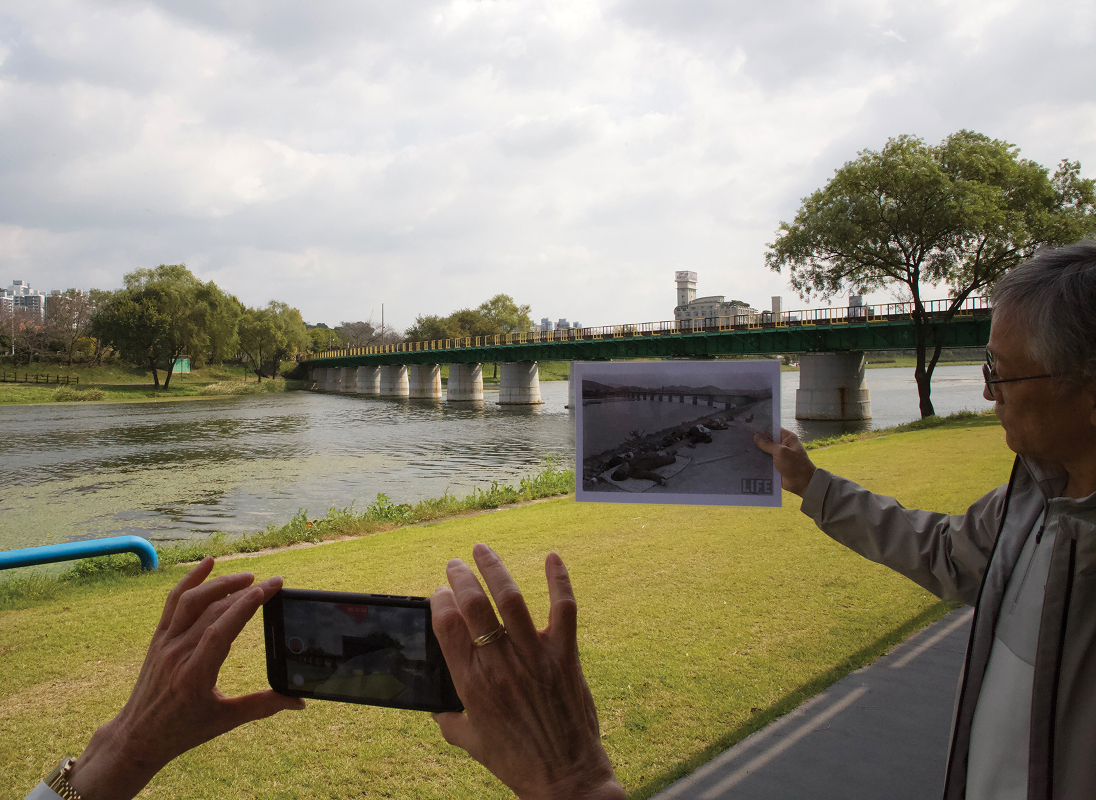
The 1948 Yeosun Uprising was one of many recurring moments of possibility whose accumulation and assemblage over time haunts our present and constitutes a kind of utopian margins. To situate the Yeosun Uprising in the utopian margins is to see it as one of the last attempts to give that historic Liberation Space a shape not dominated by authoritarian capitalism and division. It is to treat that daring effort—its motivating desires, expectations, solidarities—not as a terrible failure to be continually erased and silenced, the soldiers, city residents, and their families blamed for the state’s deathly and indiscriminate actions, but rather as one moment within Korea’s longer history of social struggle and repression. As Mr. Seo Jangsu (서장수), Chairman of the Yeosu Bereaved Family Association, said to me: “without Yeosu, there would have been no Gwangju.” So too, without 1894 no 1919; without 1919, no 1946; without 1946, no 1948; without 1948, no 1980 or 2024; without 1980, no 1987; without 1987, no 1997 and so on.18 We could modify the dates to fit.
The Liberation Space monument invites us not so much into a delimited conventional historical period but into that longer historical arc Mr. Seo Jangsu conjured which, along the seam of the utopian margins, bends the past into the future and back again, converging breaking weaving the threads that we try to grasp from the only place we can, our present, today dominated by military aggression and expansion, pre-emptive and permanent war, genocide, a bare(ed) capitalism, and a variety of rising authoritarianisms and fascisms. “Engaging form and position,” the Liberation Space monument invites us into lines of flight where past, present, future, and not-yet form a temporally discontinuous nonlinear historiography in which the future can change the past, just as the present can lag behind it; in which a past the present hasn’t yet caught up with can be summoned to haunt the present as an alternative. As fortress/nest, the Liberation Space monument invites us into a space that is haunted and aggrieved by the loss of historical alternatives that could have been and by the peculiar temporality of the shadowing of lost and better futures that insinuates itself in the present, laden with sorrow and anger, with silences that will never be spoken and with wounds that will never heal. Finally, in/as fellowship, the Liberation Space monument invites us into a living liberation space, an emancipation circuit, by turns public, fugitive, in-difference; never completely open or closed, always closing and opening at the mercy of forces we mostly do not control; always beginning again, becoming something else, creating inhabiting growing the forms of life we need. Welcome.
- 1 My warmest thanks to Binna Choi for inviting me to participate; to Yoon Walker (오윤화) of SOAS and Jeong Sohee (정소희) for research and translation assistance; and to Yoo Kyoungnam (유경남) Head of Research May 18 International Research Institute for initial contacts in Yeosu.
- 2 There are a large historical scholarship and voluminous debates about the meaning of these years and their contemporary significance not addressed here. Two of the earliest and most important scholars in defining the field are Im Heonyoung (임헌영), Director of the Center for Historical Truth and Justice (민족문제연구소) and Kim Yunshik (김윤식), Professor Seoul National University. See 백낙청 편, 『해방전후사의 인식 1』. 서울: 창작과비평사, 1979. 백낙청 편, 『해방전후사의 인식 2』. 서울: 창작과비평사, 1985. [Paik Nakchung, ed., Perceptions of the History of the Liberation Period, Vols 1 and 2 (Changi Publishers, 1979, 1985)].
- 3 Kornel Chang, A Fractured Liberation: Korea Under US Occupation (Harvard University Press, 2025).
- 4 Avery F. Gordon, The Hawthorn Archive: Letters from the Utopian Margins (Fordham University Press, 2018).
- 5 Between March 1947 and September 1954, approximately 30,000 people were killed and over one third of Jeju’s villages were destroyed in one of the most violent anti-communist/socialist/leftist counterinsurgency campaigns in modern history started and then managed by the United States. Memories and public knowledge of the Jeju April 3rd Uprising and Massacre (4.3) were suppressed by the Korean government for over half a century before the first state-sponsored truth commission was established in 2000. It goes without saying that some people on the mainland knew what was happening at the time.
- 6 주철희, 주철희의 여순항쟁 답사기 1 (흐름, 2021), 21-23 [Joo Chul-hee, Joo Chul-hee's Field Record of the Yeosun Uprising 1 (Heureum, 2021), 21-23]. See also 주철희, 주철희의 여순항쟁 답사기 2 (흐름, 2022). [Joo Chul-hee, Joo Chul-hee's Field Record of the Yeosun Uprising 2 (Heureum, 2022)], 주철희, 동포의 학살을 거부한다: 1948, 여순항쟁의 역사 (흐름, 2017), 126. [Joo Chul-hee, I refuse to slaughter my own people: 1948, the history of the Yeosun Uprising (Flow, 2017), 126]. Researchers investigating the Yeosun uprising, including me, are indebted to Dr. Joo for his tireless and meticulous work. “The Appeal to the Patriotic People” was supposedly published in the Yeosu People’s News (여수 인민보) dated October 24, 1948, although no one I spoke to has ever seen a copy of the appeal in its original Korean. It was reported on by other newspapers after coming into the possession of the United States Army when Special Representative of the United States President (and then the first United States Ambassador to Korea) John James Muccio reportedly took it, translated it into English in his report on the uprising and then researchers translated the English back into Korean.
- 7 See pp. 83-84, 110-111 and Section II "a means of preparation," especially the file |US slavery |preparation | Eliza Winston in Gordon, The Hawthorn Archive.
- 8 In September 1946 more than 250,000 workers participated in a general strike. It opposed the United States Army Military Government in Korea (USAMGIK) headed by General John Hodge and called for the restoration of power to the people’s committees that made up the People’s Republic of Korea (조선인민공화국). The general strike was prompted by a strike of railway workers in Busan on 23 September 1946 to which other unions joined the following day and by the killing by police of the strikers. The strikers demanded rice rationing – people were starving-- wage increases, opposition to dismissal, freedom for the labor movement. Students joined demanding the abolition of colonial education. The USAMGIK sent 2000 soldiers, thousands were killed, and martial law, almost an oxymoron at this point, was imposed.
- 9 주철희,동포의 학살을 거부한다, 126 [Joo, 1948 the history of the Yeosun Uprising, 126.]
- 10 A U.S. Army survey in 1946 found that 77% of respondents said yes to support of socialism and communism. See Hae-Yung Song, The State, Class and Developmentalism in South Korea (Routledge, 2020), 78. Support of socialism and communism was, on the one hand, the U.S. Army’s ideologically phobic translation of people’s support for land reform, economic and social equality, democratic governance, and a cooperative or commons-based society, very old demands in Korea, and sensible ones, given the impoverished and denigrated conditions in which the majority lived. On the other hand, support was not surprising, as, like elsewhere, the socialists and the communists were the backbone of the independence movement.
- 11 The erasure of the soldiers is the starting point for the new three-part series of investigative videos on the Yeosun Uprising produced by the documentary collective Ukhee-ssine (욱희씨네) for Newstapa, 1948, 사라진 병사들: 그들은 돌아오지 않았다 ["1948, The Missing Soldiers: They Did Not Return"]. https://withnewstapa.org/1948-missing-soldiers/
- 12 Chang, A Fractured Liberation, 5.
- 13 Chang’s book is unique for its detailed and lucid analysis of the way the U.S. occupation fatally ended the democratic and egalitarian aspirations prevalent after the end of Japanese colonialism. Thulani Davis, The Emancipation Circuit: Black Activism Forging a Culture of Freedom (Duke University Press, 2022).
- 14 I say deliberately because the Americans were perfectly aware that Jeju was a model of how well the People's Committees could govern. Chang is unequivocably demonstrative that many of Hodge's own advisors were constantly telling him what needed to be done -- land reform, worker's rights, removal of collaborators, respect for communal traditions and so on -- and he rejected their advice time and time again.
- 15 See Avery F. Gordon, “the form of life presses on the living: 1948 reverberations,” 2024. Presented at ARIKA, Episode 11, Glasgow. Accessible at: https://averygordon.net/projects/the-form-of-life-presses-on-the-living-1948-reverberations. There is no room to discuss the important role of the People’s Republic of China, founded in 1949, in this story.
- 16 The role of command officers and soldiers in former President Yoon’s martial law declaration is a complex one it will take researchers and the courts some time to clarify. But, see, for example, https://www.koreatimes.co.kr/southkorea/society/20241205/did-young-soldiers-hesitation-help-national-assembly-lift-martial-law and https://www.koreatimes.co.kr/southkorea/defense/20241210/some-officers-soldiers-resisted-martial-law-orders-in-their-own-ways. For an early critical analysis, see Hyun Ok Park, “On Politics after 12.3 Insurrection in South Korea,” Positions Praxis, December 13, 2024. https://positionspolitics.org/hyun-ok-park-on-politics-after-12-3-insurrection-in-south-korea/
- 17 https://www.chosun.com/english/national-en/2025/10/20/TMI6CKKFIVHWVD7SETXAWZ3SOM/
- 18 These are symbolic dates, including the 1 March 1919 Declaration of Independence (삼일절), the June (1987) Democratic Struggle (6월 민주 항쟁), and the 1996-1997 general strike and election of Kim Daejung (김대중).